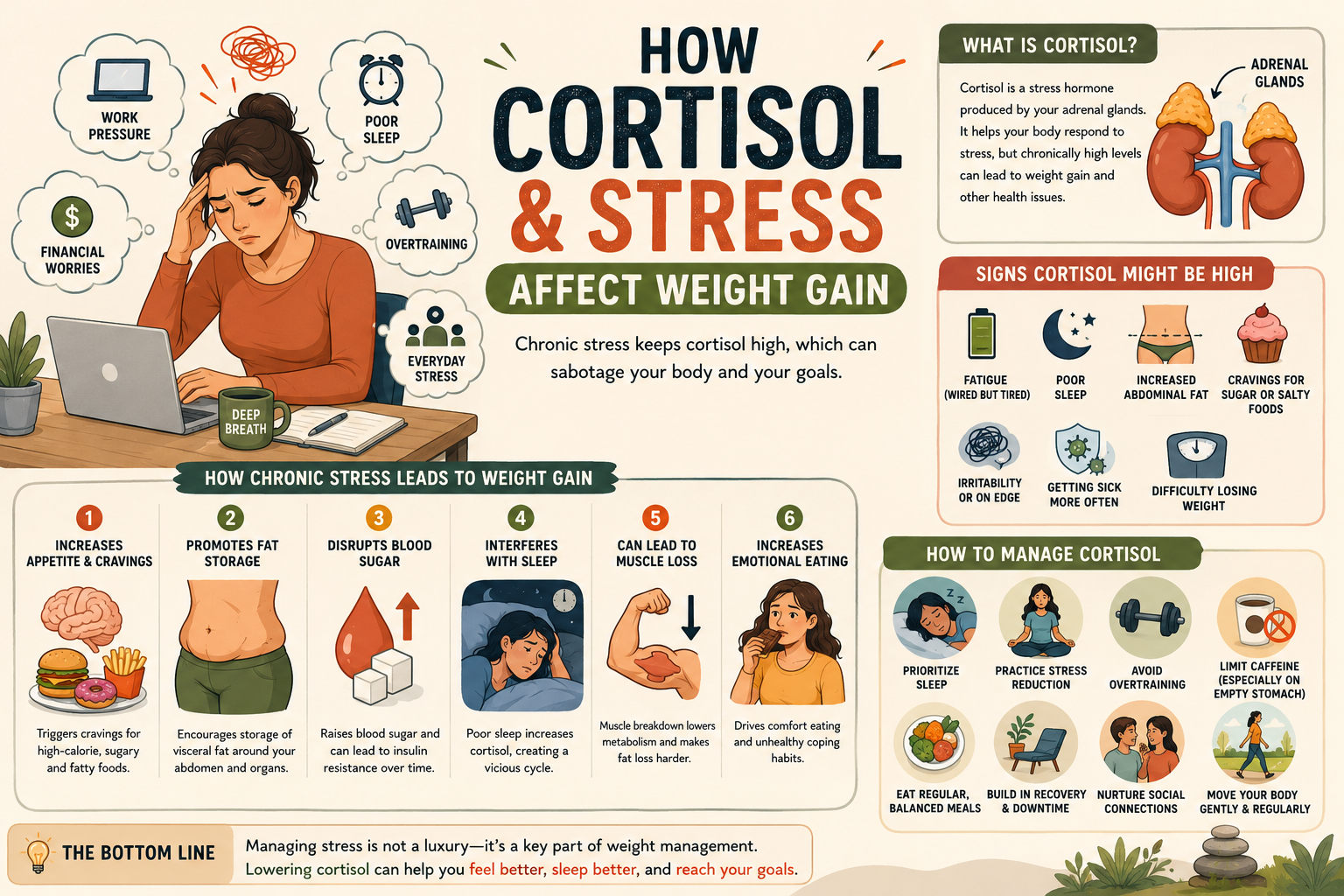
Chronic stress and elevated cortisol can affect appetite, sleep, cravings, fat storage, and your ability to manage weight.
You eat well, you exercise, and yet the scale won’t budge — or worse, it’s creeping up despite your best efforts. If you’re constantly stressed, your hormones might be working against you. Cortisol, often called the “stress hormone,” plays a far bigger role in weight management than most people realize. Understanding how it works can explain plateaus that diet and exercise alone can’t fix.
What Is Cortisol?
Cortisol is a hormone produced by your adrenal glands in response to stress. It’s not inherently bad — in fact, it’s essential for survival. Cortisol regulates your sleep-wake cycle, manages inflammation, controls blood sugar, and triggers the “fight or flight” response during acute stress or danger.
The problem isn’t cortisol itself — it’s chronically elevated cortisol from ongoing, unresolved stress. Your body wasn’t designed to handle constant low-grade stress (work pressure, financial worry, poor sleep, overtraining) the way it handles brief, acute stress like escaping a threat.
How Chronic Stress Leads to Weight Gain
1. It Increases Appetite and Cravings
Elevated cortisol stimulates appetite, particularly cravings for high-calorie, high-sugar, high-fat foods. This is an evolutionary holdover — your body interprets stress as a signal to seek quick, dense energy sources, even when you’re not actually short on food.
2. It Promotes Fat Storage, Especially Visceral Fat
Cortisol specifically promotes the storage of visceral fat — the fat surrounding your abdominal organs. This type of fat is not just cosmetically frustrating; it’s metabolically active and linked to increased risk of heart disease, insulin resistance, and inflammation.
3. It Disrupts Blood Sugar Regulation
Cortisol raises blood sugar levels to provide quick energy during stress. When this happens chronically, it can lead to insulin resistance over time, making it harder for your body to regulate blood sugar and increasing fat storage.
4. It Interferes With Sleep
Stress and cortisol have a bidirectional relationship with sleep — chronic stress disrupts sleep quality, and poor sleep further elevates cortisol the next day. This creates a compounding cycle where both stress and sleep deprivation independently — and together — promote weight gain.
5. It Can Lead to Muscle Loss
In chronically elevated states, cortisol can promote the breakdown of muscle tissue for energy, which can lower your resting metabolic rate over time and make fat loss more difficult.
6. It Increases Emotional Eating
Beyond the physiological effects, chronic stress often drives emotional eating — using food as a coping mechanism rather than eating in response to actual hunger. This is a behavioral pattern compounded by cortisol’s effect on cravings.
Signs Your Cortisol Might Be Chronically Elevated
- Persistent fatigue, especially feeling “wired but tired”
- Difficulty falling or staying asleep
- Increased abdominal fat despite consistent diet and exercise
- Frequent cravings for sugar or salty foods
- Irritability or feeling constantly on edge
- Getting sick more often (chronic stress suppresses immune function)
- Difficulty losing weight despite a calorie deficit
How to Manage Cortisol and Support Weight Management
1. Prioritize sleep. This is one of the most direct levers for cortisol regulation. Aim for 7-9 hours of consistent, quality sleep — it’s foundational, not optional.
2. Practice stress-reduction techniques. Deep breathing, meditation, journaling, or even short daily walks outdoors can measurably lower cortisol levels over time.
3. Avoid overtraining. Intense exercise is a stressor on the body, and excessive high-intensity training without adequate recovery can actually elevate cortisol further. Balance hard training days with lower-intensity movement and rest.
4. Limit caffeine, especially on an empty stomach. Caffeine can stimulate cortisol production, particularly when consumed in excess or without food.
5. Eat regular, balanced meals. Skipping meals or extreme calorie restriction can itself act as a stressor, elevating cortisol. Consistent, adequate nutrition helps stabilize hormone levels.
6. Build in recovery and downtime. Chronic “go, go, go” lifestyles without rest periods keep cortisol elevated. Intentional downtime — even 10-15 minutes daily — supports better hormone regulation.
7. Consider social connection and support. Strong social relationships are linked to lower stress reactivity and better cortisol regulation over time.
8. Move your body regularly, but gently. Low-to-moderate intensity activities like walking, yoga, or swimming can help lower cortisol, unlike excessive high-intensity training during periods of high stress.
The Bottom Line
Weight management isn’t only about calories in versus calories out — chronic stress and elevated cortisol can quietly undermine even a well-structured diet and exercise routine. If you’re doing everything “right” and still not seeing results, it may be worth examining your stress levels, sleep quality, and recovery habits alongside your nutrition and training. Managing stress isn’t a soft, secondary factor in fat loss — it’s a legitimate physiological lever worth prioritizing.
About the Author