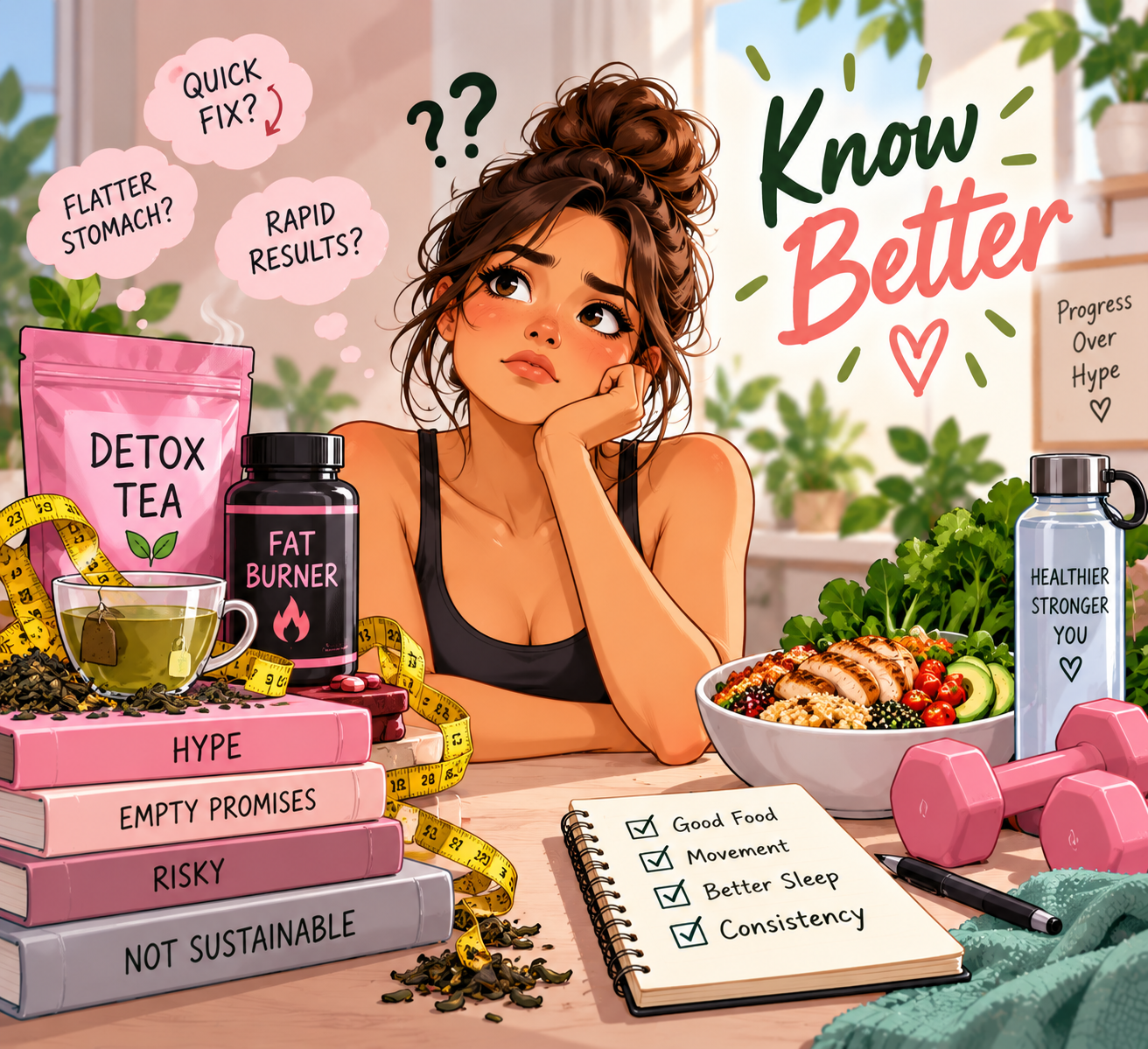
Detox teas and fat burners may promise rapid results, but sustainable fat loss comes from nutrition, training, sleep and consistency.
Scroll through social media for more than a few minutes and you’ll likely see it: a fitness influencer promoting a “detox tea” or “fat burner” that promises flatter stomachs and rapid weight loss. These products generate billions in sales annually, built on compelling marketing and impressive before-and-after photos. But what does the actual science say? Here’s an honest breakdown of what these products can and can’t do.
What Are Detox Teas?
Detox teas are marketed as products that “cleanse” your body of toxins while promoting weight loss, reduced bloating, and improved digestion. Most contain a combination of natural laxatives (like senna), diuretics, and mild stimulants (like caffeine or green tea extract).
What’s Actually Happening When You Drink Them
The “results” are mostly water weight and waste, not fat loss. Many detox teas contain senna, a natural laxative. This produces noticeable, sometimes dramatic effects on bowel movements and can create the sensation of a flatter stomach or lower number on the scale — but this reflects water and waste leaving your digestive system, not actual fat loss.
Your body already has a detox system. Your liver and kidneys are highly effective, dedicated organs that filter and remove toxins continuously. There’s no credible scientific evidence that any tea or supplement enhances this process beyond what these organs already do naturally.
Risks of Detox Teas
- Dependency and disrupted bowel function from regular laxative use, potentially requiring laxatives to have normal bowel movements over time
- Dehydration and electrolyte imbalances, particularly concerning for anyone also exercising regularly
- Nutrient malabsorption from accelerated digestive transit time
- Potential interactions with medications or existing health conditions
- Reinforcement of disordered eating patterns, as many of these products are marketed alongside restrictive diet culture messaging
What Are Fat Burners?
Fat burner supplements typically contain a combination of stimulants (caffeine, green tea extract), appetite suppressants, and various compounds marketed as boosting metabolism or fat oxidation (like L-carnitine, CLA, or raspberry ketones).
What the Research Actually Shows
Caffeine does have a modest, measurable effect on metabolic rate and fat oxidation — this is one of the few ingredients in fat burners with legitimate scientific backing, though the effect is small and often overstated in marketing.
Green tea extract (EGCG) has shown modest fat-burning effects in some studies, but the magnitude is generally small — not enough to produce significant weight loss without dietary changes.
Most other common ingredients (raspberry ketones, CLA, garcinia cambogia, L-carnitine) have weak or inconsistent evidence for meaningful fat loss in human studies, despite prominent marketing claims suggesting otherwise.
No supplement can override a calorie surplus. Regardless of what a fat burner contains, if you’re consistently eating more calories than you burn, no supplement will produce meaningful fat loss. These products, at best, provide a very small edge on top of an already solid diet and training foundation — not a substitute for one.
Risks and Side Effects of Fat Burners
- Excessive stimulant intake, particularly when combined with regular coffee or energy drink consumption, potentially causing anxiety, elevated heart rate, and disrupted sleep
- Unregulated ingredient combinations — supplements aren’t regulated with the same rigor as pharmaceuticals, meaning dosages and purity can vary significantly between brands
- Potential liver strain from certain concentrated compounds, particularly in cases of overuse
- False sense of security, leading people to neglect the actual drivers of fat loss (diet quality, consistency, strength training)
Red Flags to Watch For in Marketing
- “Lose 10 pounds in a week” — unrealistic claims not grounded in safe or sustainable fat loss rates
- Heavy reliance on before-and-after photos without disclosed methodology (lighting, posing, and time of day can dramatically alter appearance)
- Vague, unsourced claims like “clinically proven” without citing actual studies
- Proprietary blends that don’t disclose exact dosages of active ingredients
- Testimonials from influencers rather than peer-reviewed research
- Pressure tactics like limited-time offers or urgency-based marketing
What Actually Works Instead
If the goal is genuine, sustainable fat loss, the fundamentals remain unchanged regardless of what supplement marketing suggests:
- A consistent calorie deficit through mindful eating, not restrictive quick fixes
- Adequate protein intake to preserve muscle and support satiety
- Regular strength training to build and maintain lean muscle mass
- Consistent sleep and stress management, both of which directly affect hunger hormones and fat storage
- Patience and consistency over weeks and months — sustainable fat loss is typically in the range of 0.5-1% of body weight per week
Is There Any Place for Supplements?
Some supplements have modest, legitimate support — caffeine for a small metabolic and performance boost, or protein powder for convenience in meeting protein targets. The key distinction is that these support an already solid foundation of diet and training; they don’t replace it, and none produce meaningful fat loss on their own.
The Bottom Line
Detox teas and fat burners are built on compelling marketing rather than compelling science. Detox teas primarily cause water and waste loss through laxative effects, not fat loss, and can create unhealthy dependency with regular use. Fat burners contain a few ingredients with modest, legitimate effects, but nothing capable of producing meaningful results without a solid diet and training foundation already in place. Save your money, and put the effort into the fundamentals that actually work.
About the Author