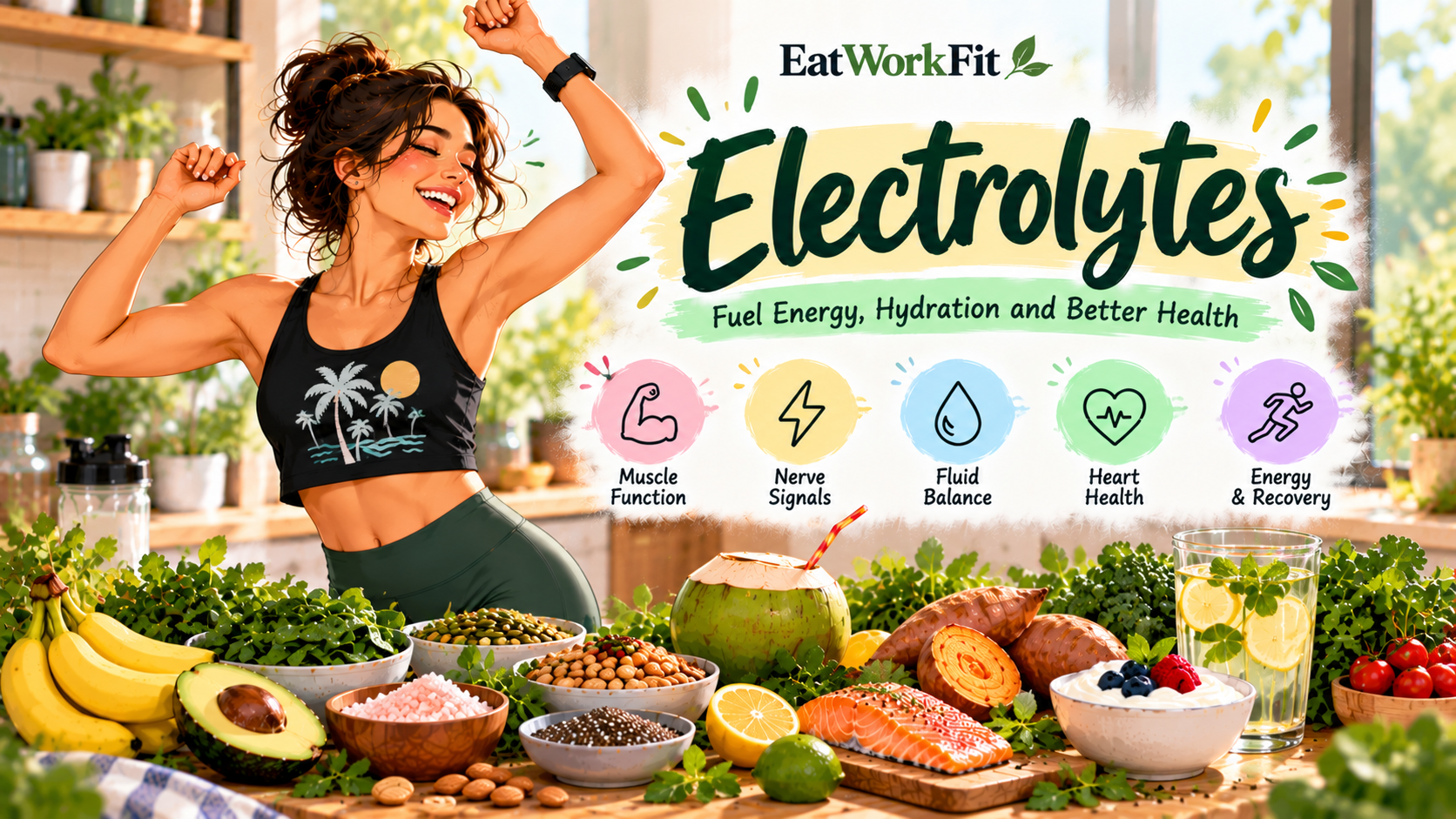
Discover what electrolytes do, the best natural food sources, and how to maintain electrolyte balance for hydration, heart health, muscle function, and workout recovery.
Mention electrolytes and most people picture a brightly colored sports drink or a powder packet. Marketing has narrowed a much bigger story into a product category. Electrolytes are minerals that carry an electrical charge when dissolved in body fluids, and they are involved in nearly everything your body does: nerve signals, muscle contractions, heartbeat, fluid balance, and blood pressure. Most people get their electrolytes, or fail to, from everyday food rather than from a bottle, and the balance between them matters as much as the amount of any single one.
What Are Electrolytes?
The main electrolytes in your body are:
- Sodium: regulates fluid balance, blood volume, and nerve function
- Potassium: supports heart rhythm, muscle contraction, and blood pressure control
- Magnesium: involved in muscle relaxation, nerve function, and energy production
- Calcium: needed for muscle contraction, nerve signaling, and bone health
- Chloride: works with sodium to maintain fluid balance and stomach acid
- Phosphate: supports bone structure and energy storage
These minerals dissolve in your blood, cells, and the fluid between cells. The concentration differences between the inside and outside of your cells create the electrical gradients that make nerves fire and muscles move. This is why a disturbance in electrolytes can show up as cramps, weakness, palpitations, or confusion.
Why Balance Matters More Than Any Single Mineral
Electrolytes work as a system. Sodium pulls water toward it, while potassium moves in the opposite direction, concentrated inside cells. Your kidneys constantly adjust the levels to keep them within a narrow range.
The relationship between sodium and potassium has drawn particular attention. Modern diets built on processed and restaurant foods tend to be high in sodium and low in potassium, the reverse of what many researchers consider ideal. A higher potassium intake is associated with lower blood pressure, and some studies suggest the sodium-to-potassium ratio may predict cardiovascular risk better than sodium alone.
Sodium: Necessary, but Easy to Overdo
Sodium isn’t the villain it’s sometimes made out to be. You need it, and too little can be dangerous. The challenge for most people is the opposite: eating too much.
Where it comes from. Most dietary sodium doesn’t come from the salt shaker. It comes from processed and packaged foods, restaurant meals, breads, cured meats, sauces, instant noodles, chips, and pickles.
How much is recommended. Most health guidelines suggest keeping sodium below about 2,300 mg per day (roughly one teaspoon of table salt), with some recommending lower targets for people with high blood pressure. Average intakes in many countries exceed this.
What too much can do. Chronically high sodium intake is linked to higher blood pressure, which raises the risk of heart disease, stroke, and kidney problems. It can also cause temporary water retention and bloating.
What too little can do. Low blood sodium (hyponatremia) can cause headache, nausea, confusion, and in severe cases seizures. It’s uncommon from diet alone but can happen from drinking very large amounts of plain water during prolonged exercise, certain medications, or medical conditions.
Potassium: The Under-Eaten Partner
Potassium is the electrolyte most people don’t get enough of. Adequate intake targets set by the National Academies are about 2,600 mg per day for women and 3,400 mg per day for men, and many adults fall short.
What it does. Potassium helps your heart beat regularly, allows muscles to contract and relax, and helps your body excrete excess sodium. Diets rich in potassium are associated with lower blood pressure and a lower risk of stroke.
Signs you may be low. Muscle weakness, cramps, fatigue, constipation, and in more significant deficiency, irregular heartbeat. Low potassium usually has a medical cause such as prolonged vomiting or diarrhea, certain diuretics, or kidney issues, not just diet, so persistent symptoms deserve a medical check.
Best Food Sources of Potassium
| Food | Approx. Potassium |
|---|---|
| White beans, cooked (1 cup) | ~1,000 mg |
| Baked potato with skin (1 medium) | ~900 mg |
| Spinach, cooked (1 cup) | ~840 mg |
| Lentils, cooked (1 cup) | ~730 mg |
| Avocado (1 medium) | ~690 mg |
| Coconut water (1 cup) | ~600 mg |
| Yogurt, plain (1 cup) | ~550 mg |
| Sweet potato (1 medium) | ~540 mg |
| Banana (1 medium) | ~420 mg |
| Salmon (3 oz, cooked) | ~400 mg |
Notice that the banana, the food everyone associates with potassium, is a decent source but far from the top. Beans, potatoes, leafy greens, and legumes do more of the heavy lifting.
Magnesium and Calcium: The Supporting Cast
Both are electrolytes as well as nutrients in their own right. Magnesium helps muscles relax after contracting, while calcium triggers the contraction, which is why the two work in balance. Low magnesium is a common reason for muscle twitching and cramps, as covered in our magnesium article.
When You Actually Need to Replace Electrolytes
For most people on a normal day, food and water provide all the electrolytes required. Extra replacement makes sense in specific situations:
- Prolonged intense exercise, especially lasting over an hour or in hot, humid conditions, when you lose significant sweat
- Heavy sweating from work in hot environments
- Vomiting or diarrhea, where an oral rehydration solution is the standard recommendation
- Certain diets, such as very low-carb or ketogenic eating, which can increase sodium and potassium losses in the early weeks
- Illness with fever
For a casual 30-45 minute workout, plain water and a normal meal afterward are typically enough. Sports drinks are designed for sustained athletic effort and often contain a lot of added sugar, which most people don’t need.
Natural and Simple Ways to Replenish
- Coconut water: naturally contains potassium and some sodium, though it’s lower in sodium than most athletes lose in sweat
- Oral rehydration solutions: carefully balanced with sodium, glucose, and potassium, and recommended for dehydration from stomach illness
- Homemade options: water with a small pinch of salt, a squeeze of citrus, and a little honey or fruit juice
- Whole foods: a meal with potatoes, yogurt, beans, or fruit after exercise replenishes multiple electrolytes along with nutrients and energy
- Salty foods after heavy sweating: a salted snack with water can help replace sodium
Signs of an Electrolyte Imbalance
Symptoms vary depending on which electrolyte is off and in which direction, but common ones include:
- Muscle cramps, spasms, or twitching
- Weakness or unusual fatigue
- Headaches
- Dizziness or lightheadedness
- Nausea
- Irregular or rapid heartbeat
- Confusion or difficulty concentrating
- Numbness or tingling
Because these overlap with dehydration, stress, and many other conditions, they aren’t diagnostic. Seek prompt medical attention for palpitations, severe weakness, confusion, or fainting.
Who Should Be Careful
People with kidney disease. Failing kidneys can’t regulate potassium well, and high potassium (hyperkalemia) can be dangerous for the heart. Anyone with kidney problems should follow their medical team’s advice rather than raising potassium intake on their own.
People on certain medications. ACE inhibitors, ARBs, and potassium-sparing diuretics can raise potassium levels, while other diuretics can lower it. Ask your doctor before using potassium supplements or salt substitutes.
People with heart conditions or high blood pressure. Sodium targets may be lower, and any big dietary change is best discussed with a doctor.
Salt substitutes. Many replace sodium chloride with potassium chloride. They can be useful for some people but risky for those with kidney disease or on the medications above.
Electrolyte supplements. High-dose potassium and other mineral supplements can cause problems when taken without medical need. Food is the safer route for most people.
Practical Ways to Improve Your Electrolyte Balance
- Eat more potassium-rich foods. Add beans, lentils, leafy greens, potatoes, yogurt, avocados, and fruit throughout the day.
- Cut back on heavily processed foods. This reduces sodium far more effectively than removing the salt shaker.
- Read labels. Check the sodium content of breads, sauces, soups, and snacks. Under 140 mg per serving is considered low.
- Hydrate sensibly. Drink to thirst and sweat losses, and don’t force huge volumes of plain water in a short time.
- Match replacement to need. Use electrolyte drinks for long or intense efforts or illness, not as a daily beverage.
- Include magnesium and calcium sources. Nuts, seeds, dairy or fortified alternatives, and greens round out the picture.
The Bottom Line
Electrolytes are far more than a sports drink feature. They keep your heart steady, your muscles working, and your fluids balanced, and the ratio between sodium and potassium matters as much as the totals. For most people the practical goal is simple: eat fewer processed foods, eat more potassium-rich whole foods, and save dedicated electrolyte replacement for situations that call for it. If you have kidney disease, a heart condition, or take medications that affect electrolytes, get personalized guidance before making big changes.
About the Author