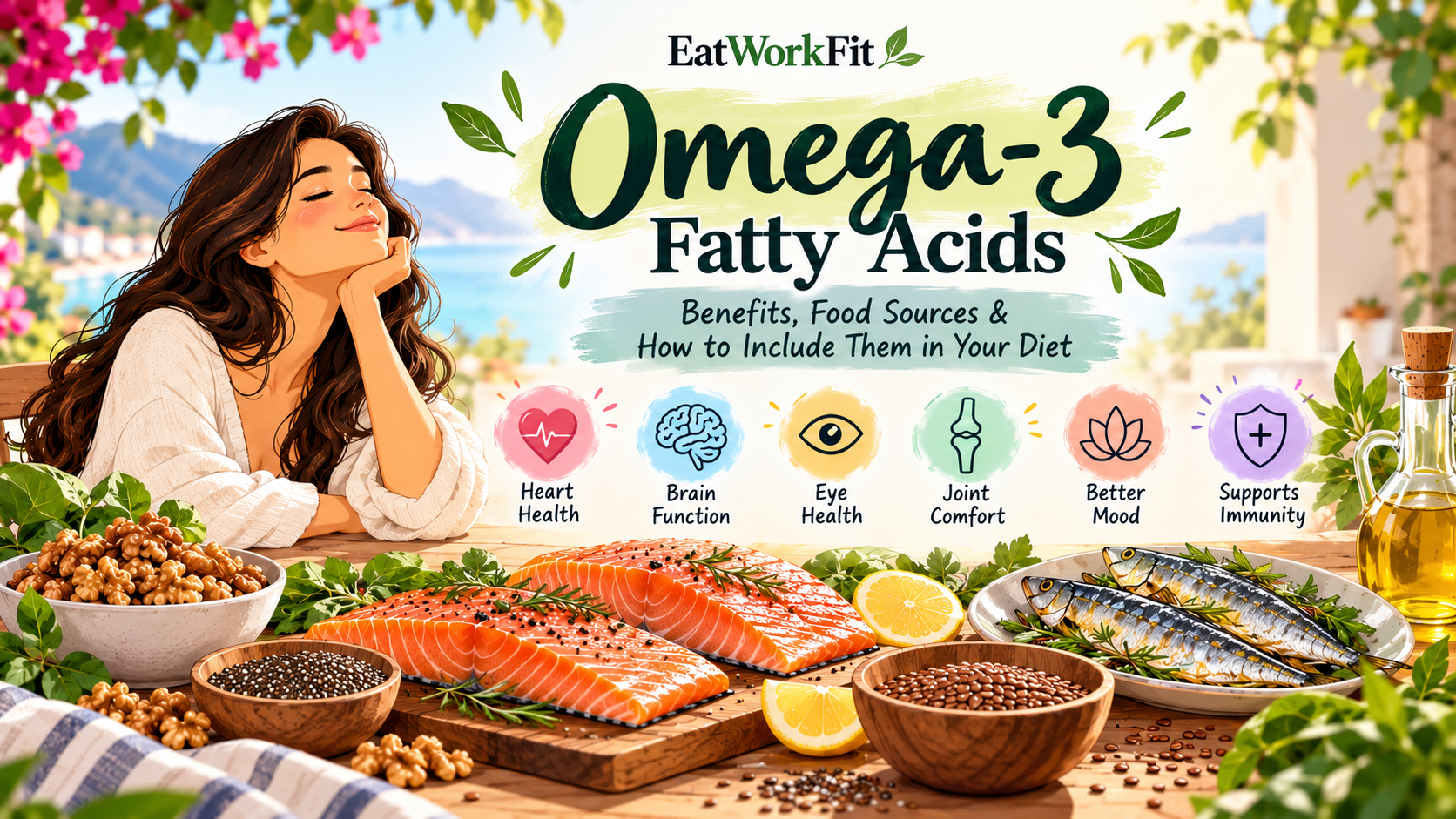
Discover the benefits of omega-3 fatty acids, their best food sources, and how to include these essential fats in your daily diet for better heart, brain, and overall health.
Your body can’t make omega-3 fatty acids on its own, which is why they’re called “essential.” They have to come from food. Yet in many parts of the world, typical diets are heavy in processed foods and refined oils and light on fatty fish, leaving most people with intakes well below what researchers consider beneficial. Omega-3s support your heart, brain, eyes, joints, and mood, and they’re one of the easiest nutritional gaps to close once you know where to look.
The Three Types of Omega-3
Not all omega-3s are the same, and the difference matters.
ALA (alpha-linolenic acid) is found in plant foods like flaxseed, chia seeds, and walnuts. It’s the “parent” omega-3, and your body can convert it into the other two forms.
EPA (eicosapentaenoic acid) is found mainly in fatty fish and algae. It’s most associated with reducing inflammation and supporting heart and mood health.
DHA (docosahexaenoic acid) is also found in fatty fish and algae. It’s a major structural component of the brain and retina, which makes it critical for cognitive and eye health.
The conversion problem: the body converts ALA into EPA and DHA very inefficiently, often only a few percent. Relying on plant sources alone may not deliver enough EPA and DHA, which is why direct sources matter.
What Omega-3s Do in Your Body
- Heart health: associated with lower triglycerides and support for healthy blood pressure and heart rhythm
- Brain function: DHA makes up a large share of the fats in brain tissue, supporting memory, focus, and cognitive development
- Inflammation: EPA and DHA help the body produce compounds that calm inflammatory responses
- Mood: some research links higher omega-3 intake to lower rates of depressive symptoms, though results vary between studies
- Eye health: DHA is concentrated in the retina and supports visual function
- Joint comfort: may help reduce stiffness and tenderness in inflammatory joint conditions
- Pregnancy and infant development: DHA is important for fetal brain and eye development
Why So Many People Fall Short
Low fish consumption. Health organizations generally recommend two servings of fatty fish per week, and most people eat far less.
High omega-6 intake. Omega-6 fats, found in many refined vegetable oils and processed foods, compete with omega-3s for the same enzymes. A diet very high in omega-6 and low in omega-3 shifts the body toward a more pro-inflammatory balance. Omega-6s aren’t “bad,” but the imbalance in modern diets is worth addressing.
Over-reliance on ALA. Vegetarians and vegans often get enough ALA but very little EPA and DHA, given the poor conversion rate.
Signs Your Intake May Be Low
These signs are non-specific and can have many causes, so treat them as prompts to look at your diet rather than a diagnosis:
- Dry skin or brittle hair and nails
- Dry, irritated eyes
- Joint stiffness or aches
- Difficulty concentrating
- Low mood
- Fatigue
How Much Do You Need?
There’s no single universal number. A common guideline for healthy adults is 250-500mg of combined EPA and DHA per day, which is roughly what two servings of fatty fish per week provide. For ALA, adequate intake is about 1.6g/day for men and 1.1g/day for women. People with heart disease, high triglycerides, or other conditions may be advised to take more, and that should be guided by a healthcare provider.
Best Food Sources of Omega-3
| Food | Approx. Omega-3 | Type |
|---|---|---|
| Salmon (3 oz, cooked) | 1.5-1.8g | EPA + DHA |
| Mackerel (3 oz, cooked) | 1.0-1.5g | EPA + DHA |
| Sardines (3 oz, canned) | 1.2g | EPA + DHA |
| Chia seeds (1 oz) | ~5g | ALA |
| Ground flaxseed (1 tbsp) | ~1.6g | ALA |
| Walnuts (1 oz) | ~2.5g | ALA |
| Light canned tuna (3 oz) | ~0.2g | EPA + DHA |
Exact amounts vary by species, farming method, and preparation.
Tips for Plant-Based Eaters
If you don’t eat fish, an algae-based omega-3 supplement provides EPA and DHA directly, which is the same source fish get theirs from. Pair it with daily ALA foods like ground flaxseed, chia seeds, and walnuts. Flaxseed should be ground, since whole seeds often pass through undigested.
Should You Take a Fish Oil Supplement?
If you rarely eat fish, a supplement can be a reasonable option. A few points to keep in mind:
- Check the label for EPA and DHA content, not just the total “fish oil” amount. A 1,000mg capsule may contain only 300mg of actual EPA and DHA.
- Look for third-party testing for purity and contaminants.
- Store it properly. Fish oil can go rancid, and a strong fishy smell is a warning sign.
- Talk to a doctor first if you take blood thinners, have a bleeding disorder, or are scheduled for surgery, since high doses of omega-3s can affect blood clotting.
- Don’t overdo it. More isn’t always better, and very high doses may carry risks.
Practical Ways to Get More Omega-3 Daily
- Eat fatty fish twice a week. Salmon, sardines, and mackerel are the most reliable sources.
- Add a tablespoon of ground flaxseed or chia to oatmeal, yogurt, or smoothies.
- Snack on walnuts instead of processed snacks.
- Cook with less refined vegetable oil. Using olive oil more often helps improve your omega-3 to omega-6 balance.
- Choose smaller fish like sardines and anchovies, which tend to be lower in mercury than large predatory fish.
A Note on Mercury
Some large fish, such as shark, swordfish, and king mackerel, can contain high levels of mercury. Pregnant women and young children are generally advised to avoid these. Smaller fatty fish like salmon, sardines, and anchovies are considered safer choices for regular consumption.
The Bottom Line
Omega-3s are a small change with wide-ranging benefits for your heart, brain, eyes, joints, and mood. Eating fatty fish twice a week, adding ALA-rich seeds and nuts to your daily routine, and using an algae or fish oil supplement if needed can close the gap for most people. Because you can’t produce these fats yourself, getting them from your plate is one of the simplest long-term health investments you can make.
About the Author