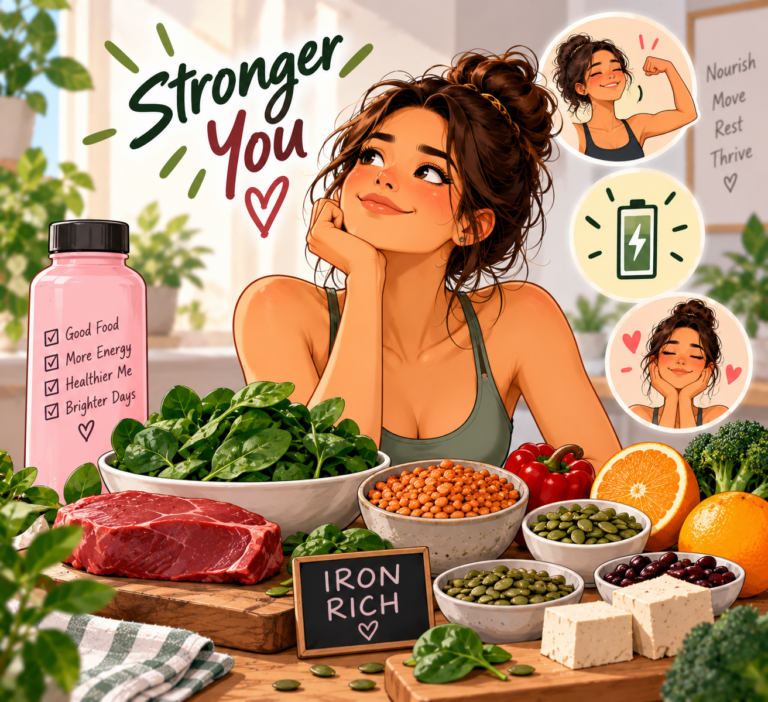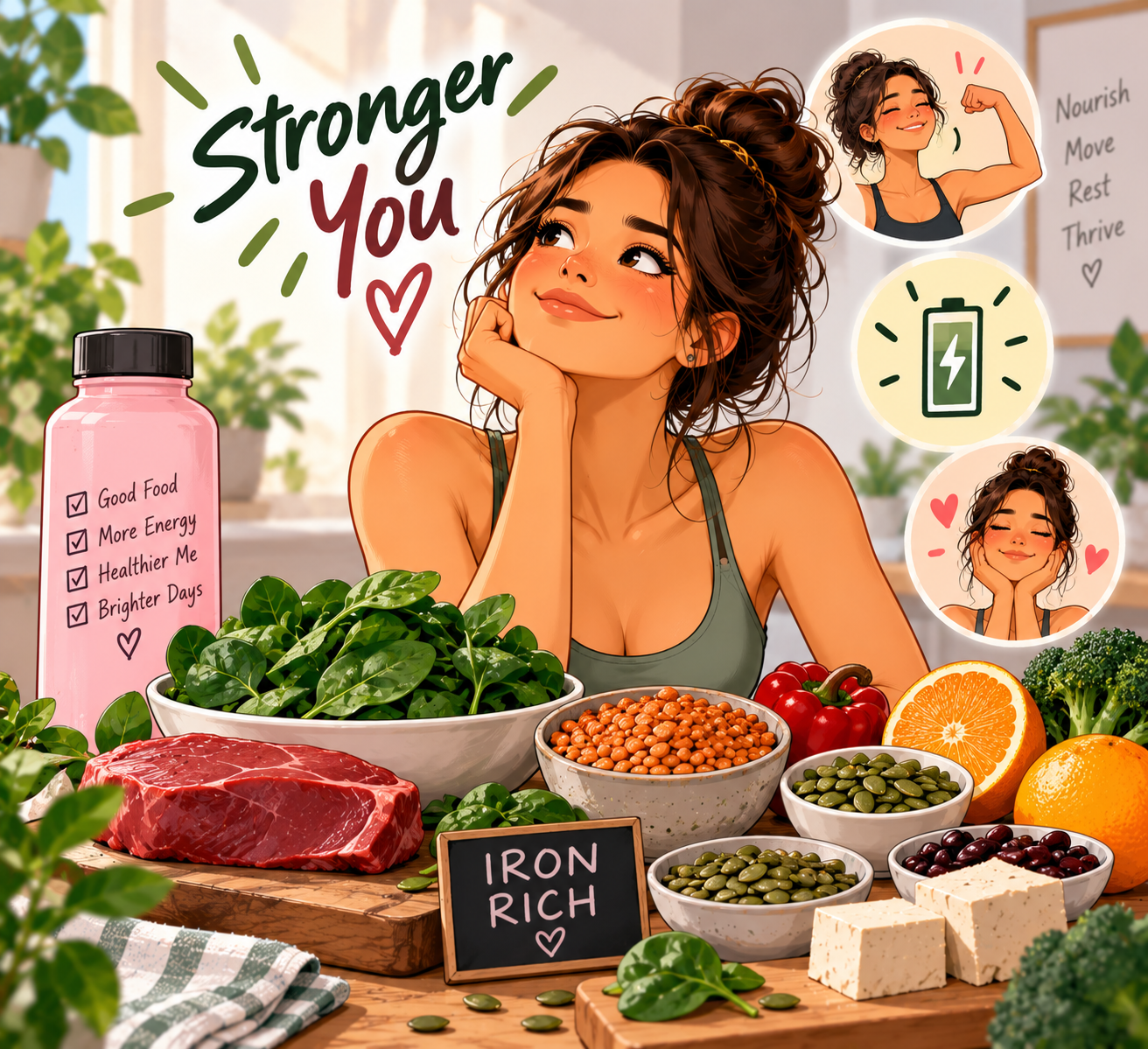
Iron-rich foods and smart absorption strategies can help women maintain healthy iron levels and support energy.
Iron deficiency is one of the most common nutrient deficiencies worldwide, and women are disproportionately affected — largely due to menstruation, pregnancy, and dietary patterns that don’t always account for higher iron needs. Despite how common it is, it’s frequently misattributed to “just being tired” or written off as normal, when it’s often a fixable nutritional gap with a clear underlying cause.
Why Women Are More at Risk
Menstruation. Regular monthly blood loss means women of reproductive age lose iron consistently, requiring significantly higher intake than men to maintain adequate stores. Heavier periods increase this risk further.
Pregnancy. Iron needs roughly double during pregnancy to support increased blood volume and fetal development, making deficiency common without adequate dietary attention or supplementation.
Lower average intake of iron-rich foods. Women, on average, consume fewer calories than men, which can mean lower overall intake of iron-rich foods unless meals are specifically planned with this in mind.
Plant-based diets without adequate planning. Plant-based iron (non-heme iron) is less efficiently absorbed than iron from animal sources (heme iron), making deficiency more common among women following vegetarian or vegan diets without deliberate attention to iron intake and absorption.
Why Iron Matters
Iron is essential for producing hemoglobin, the protein in red blood cells responsible for carrying oxygen throughout your body. Without adequate iron, your body can’t produce enough healthy red blood cells, leading to a condition called iron-deficiency anemia — but even before reaching full anemia, low iron stores can produce noticeable symptoms.
Signs of Iron Deficiency
- Persistent fatigue and low energy
- Pale skin
- Shortness of breath during normal activity
- Dizziness or lightheadedness
- Cold hands and feet
- Brittle nails
- Hair thinning or loss
- Difficulty concentrating (“brain fog”)
- Unusual cravings for non-food items like ice (a specific symptom called pica)
- Restless legs, particularly at night
Because fatigue is such a common, nonspecific complaint, iron deficiency often goes unrecognized for a long time unless bloodwork specifically checks ferritin (iron stores) levels.
How Much Iron Do You Need?
General recommendations are roughly 18mg/day for women ages 19-50 (compared to 8mg/day for men), increasing to 27mg/day during pregnancy. Needs may be higher for women with heavier menstrual cycles or diagnosed deficiency.
Heme vs. Non-Heme Iron
Heme iron (from animal sources) is absorbed at a significantly higher rate — roughly 15-35% — and includes foods like red meat, poultry, and fish.
Non-heme iron (from plant sources) is absorbed at a lower rate — roughly 2-20% — and includes foods like lentils, spinach, and fortified cereals. This doesn’t mean plant sources are ineffective, but it does mean intake needs to be higher, and absorption strategies (discussed below) become more important.
Best Food Sources of Iron
| Food | Approx. Iron | Type |
|---|---|---|
| Beef (3 oz) | 2.1mg | Heme |
| Chicken thigh (3 oz) | 1.1mg | Heme |
| Lentils, cooked (1 cup) | 6.6mg | Non-heme |
| Spinach, cooked (1 cup) | 6.4mg | Non-heme |
| Tofu (1/2 cup) | 3.4mg | Non-heme |
| Fortified cereal (1 serving) | 8-18mg | Non-heme |
| Pumpkin seeds (1 oz) | 2.5mg | Non-heme |
| Dark chocolate (1 oz) | 3.3mg | Non-heme |
How to Improve Iron Absorption
1. Pair iron-rich foods with vitamin C. Vitamin C significantly enhances non-heme iron absorption. Adding citrus, bell peppers, or tomatoes to an iron-rich meal (like squeezing lemon over lentils or spinach) can meaningfully boost how much iron your body actually absorbs.
2. Avoid coffee or tea immediately with iron-rich meals. Compounds in coffee and tea called tannins can inhibit iron absorption significantly. Spacing these beverages at least an hour away from iron-rich meals helps preserve absorption.
3. Be mindful of calcium timing. Calcium can compete with iron for absorption. If taking a calcium supplement, spacing it apart from iron-rich meals or iron supplements can improve overall absorption of both.
4. Cook in cast iron cookware. This can modestly increase the iron content of food, particularly acidic dishes like tomato sauce.
When to Consider Supplementation
If dietary changes alone aren’t sufficient, or if bloodwork confirms significant deficiency, iron supplementation may be necessary — but this should generally be guided by a healthcare provider, since excessive iron intake can cause its own health issues, including digestive discomfort and, in rare cases, iron overload.
Common supplement forms:
- Ferrous sulfate — widely available and effective, though can cause digestive discomfort in some people
- Ferrous bisglycinate — often gentler on digestion, sometimes recommended for those sensitive to standard iron supplements
The Bottom Line
Iron deficiency is common among women, often overlooked, and frequently mistaken for general tiredness or “just needing more sleep.” If you’re experiencing persistent fatigue, pale skin, or unusual cravings, it’s worth asking a healthcare provider for bloodwork that specifically checks iron and ferritin levels. From there, prioritizing iron-rich foods, pairing them strategically with vitamin C, and being mindful of absorption inhibitors like coffee and tea can meaningfully improve your levels over time.
About the Author