Weight loss plateaus are normal. Understand what's causing the stall and make smarter, sustainable adjustments.
You were losing weight steadily, then suddenly — nothing. The scale hasn’t moved in weeks despite doing everything the same way that worked before. Weight loss plateaus are one of the most frustrating and common experiences on a fat loss journey, but they’re also one of the most misunderstood. Here’s what’s actually happening and how to break through it.
Why Plateaus Happen: The Science
1. Your Metabolism Adapts to Weight Loss
As you lose weight, your body requires fewer calories to function — a smaller body simply burns less energy at rest. This means the calorie deficit that worked when you started may no longer be a deficit at all once you’ve lost 10, 15, or 20 pounds, since your maintenance calories have dropped along with your body weight.
2. Metabolic Adaptation Beyond Just Body Size
Beyond the expected calorie reduction from a smaller body, prolonged dieting can trigger additional metabolic slowdown — your body becomes more efficient at using energy, and hormones that regulate hunger and metabolism (like leptin) can shift in ways that make further fat loss more difficult.
3. Water Retention Masks Fat Loss
Fat loss doesn’t always show up immediately on the scale. Factors like increased sodium intake, new exercise routines (especially strength training), stress, hormonal fluctuations, and even inadequate sleep can cause water retention that temporarily hides real fat loss happening underneath.
4. Calorie Creep
As diets progress, portion sizes can gradually increase without realizing it — a slightly bigger scoop here, an extra bite there. Over weeks, this “calorie creep” can slowly erase what was once a clear deficit.
5. Reduced Non-Exercise Activity
As people diet, they often unconsciously move less throughout the day — fidgeting less, taking the stairs less, generally becoming more sedentary. This is called NEAT (non-exercise activity thermogenesis) reduction, and it can meaningfully reduce total daily calorie burn without you noticing.
6. Adaptive Hunger and Reduced Adherence
The longer someone diets, the more hunger hormones tend to shift in favor of increased appetite, making strict adherence to a calorie deficit progressively more difficult — leading to unconscious under-reporting or looser tracking over time.
How to Break Through a Plateau
1. Reassess Your Actual Intake
Before changing anything else, honestly re-track your food for a few days. Studies consistently show people underestimate calorie intake, sometimes significantly. Weigh and measure food rather than eyeballing it, and don’t forget cooking oils, sauces, and drinks.
2. Give It Time Before Reacting
A stall of 1-2 weeks isn’t necessarily a true plateau — weight fluctuates naturally due to water retention, hormonal cycles, and digestion. Look at trends over 3-4 weeks before making changes, and consider tracking weekly averages rather than daily numbers.
3. Recalculate Your Calorie Needs
As you lose weight, your maintenance calories decrease. Recalculate your target intake based on your current weight rather than continuing to eat based on your starting weight from months ago.
4. Increase Non-Exercise Activity (NEAT)
Rather than adding more structured cardio, focus on increasing incidental movement throughout the day — taking the stairs, parking farther away, walking during phone calls. This can meaningfully increase daily calorie burn without adding training stress.
5. Add or Adjust Strength Training
If you’re not strength training, adding it can help preserve and build muscle, which supports metabolic rate. If you already strength train, ensure you’re still progressively overloading rather than plateauing in your workouts too.
6. Consider a Diet Break
Counterintuitively, taking 1-2 weeks to eat at maintenance calories can help reset hormones like leptin, reduce diet fatigue, and improve adherence when you resume your deficit — often leading to renewed progress afterward.
7. Manage Stress and Sleep
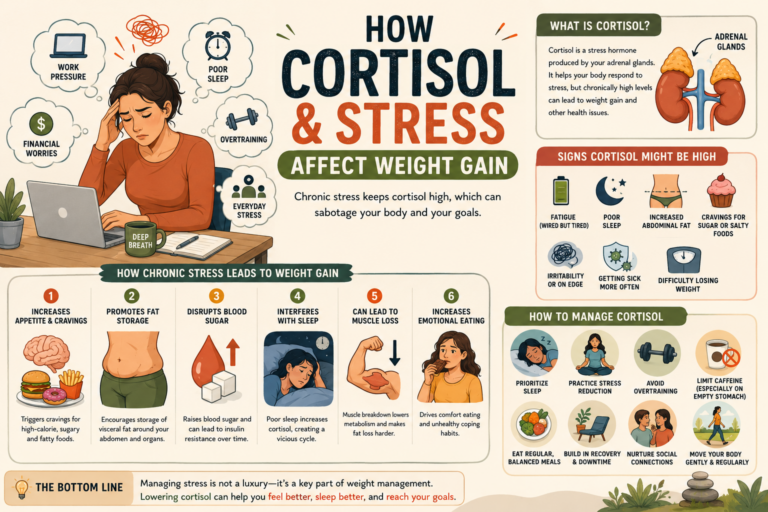
As covered in our cortisol and sleep articles, both factors directly influence weight regulation. A plateau caused by elevated cortisol or poor sleep won’t respond to further calorie cutting — it needs to be addressed directly.
8. Avoid Cutting Calories Too Aggressively
The instinct when hitting a plateau is often to cut calories further, but overly aggressive deficits increase muscle loss risk, worsen hunger and cravings, and are harder to sustain — often leading to a binge-restrict cycle rather than steady progress.
9. Look Beyond the Scale
Track additional metrics like measurements, progress photos, and how clothes fit. Body recomposition (losing fat while gaining muscle) can result in a stalled scale weight despite genuine physical changes.
A Realistic Plateau-Breaking Checklist
- Re-track intake honestly for 3-5 days
- Look at 3-4 week weight trends, not daily fluctuations
- Recalculate calorie needs based on current weight
- Increase daily movement (NEAT) before adding more structured cardio
- Confirm strength training includes progressive overload
- Evaluate sleep quality and stress levels
- Consider a short diet break if you’ve been dieting for 8+ weeks continuously
- Track non-scale progress markers alongside weight
When a Plateau Might Actually Be Progress
Sometimes what feels like a stall is actually body recomposition — losing fat while simultaneously gaining muscle, particularly common for beginners to strength training. The scale may not move, but body composition is improving. This is why relying solely on the scale can be misleading; measurements and how your clothes fit often tell a more accurate story.
The Bottom Line
Weight loss plateaus are a normal, expected part of the process — not a sign that something is fundamentally wrong or that you should abandon your approach. Metabolic adaptation, water retention, and calorie creep all contribute to stalls that feel confusing in the moment but usually have identifiable, fixable causes. Reassess honestly, adjust based on current data rather than assumptions, and remember that consistency over months matters far more than any single week’s number on the scale.
About the Author