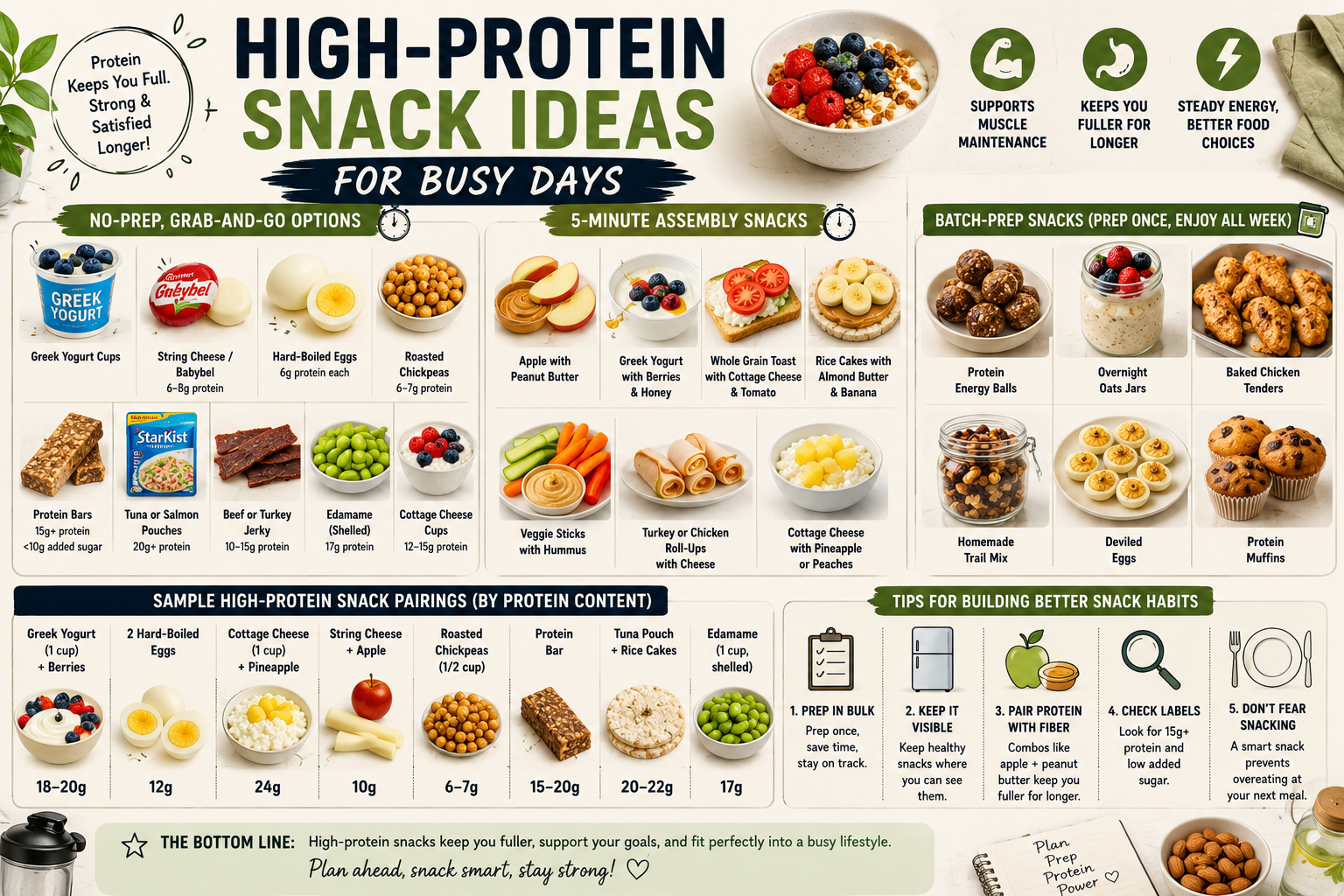
Snacking gets a bad reputation in the diet world, but the problem was never snacking itself — it’s what most people snack on. Chips, cookies, and vending machine grabs spike blood sugar and leave you hungry again within an hour. The fix isn’t cutting out snacks entirely; it’s choosing ones built around protein, which keeps you fuller for longer, supports muscle maintenance, and curbs the urge to overeat at your next meal.
Why Protein-Based Snacks Work Better
Protein is the most satiating macronutrient — it slows digestion, stabilizes blood sugar, and triggers fullness signals more effectively than carbs or fat alone. A snack with 15-20g of protein will keep hunger at bay far longer than a bag of chips with the same calorie count, and it contributes toward your daily protein target instead of just adding empty calories.
No-Prep, Grab-and-Go Options
These require zero cooking and work well for busy mornings or desk drawers:
- Greek yogurt cups (unsweetened or low-sugar) — 15-20g protein per serving
- String cheese or Babybel — convenient, portable, roughly 6-8g protein each
- Hard-boiled eggs (pre-boil a batch for the week) — 6g protein per egg
- Roasted chickpeas — crunchy, portable, fiber-rich alongside protein
- Protein bars (check labels — aim for 15g+ protein and under 10g added sugar)
- Canned tuna or salmon pouches — 20g+ protein, no cooking required
- Beef or turkey jerky — shelf-stable, high protein, watch sodium content
- Edamame (pre-shelled, ready to eat cold or reheated) — plant-based protein plus fiber
- Cottage cheese cups — 12-15g protein per serving, pairs well with fruit
5-Minute Assembly Snacks
Slightly more effort, still fast enough for a busy schedule:
- Apple or banana with peanut/almond butter — natural sugars paired with protein and fat for sustained energy
- Greek yogurt with berries and a drizzle of honey — protein plus antioxidants
- Whole grain toast with cottage cheese and tomato — savory, filling combination
- Rice cakes with almond butter and banana slices — quick carb-protein-fat combo
- Veggie sticks (carrots, cucumber, bell pepper) with hummus — protein from chickpeas plus fiber from vegetables
- Turkey or chicken roll-ups with cheese — roll deli meat with a slice of cheese, no bread needed
- Cottage cheese with pineapple or peaches — sweet-savory combination with 15g+ protein
Batch-Prep Snacks (Prepare Once, Use All Week)
Worth setting aside 20-30 minutes on a weekend for:
- Protein energy balls — oats, protein powder, peanut butter, honey, rolled into bite-sized portions and refrigerated
- Overnight oats jars — oats, milk, Greek yogurt, chia seeds, prepped in individual jars for grab-and-go breakfasts or snacks
- Baked chicken tenders or nuggets — cook a large batch, portion into containers for the week
- Homemade trail mix — combine roasted nuts, seeds, and a small amount of dried fruit for a protein-and-fiber-rich option
- Deviled eggs — a slightly more prepared take on hard-boiled eggs, easy to batch
- Protein muffins — made with protein powder or Greek yogurt as a base, freeze extras for later in the week
Sample High-Protein Snack Pairings by Protein Content
| Snack | Approx. Protein |
|---|---|
| Greek yogurt (1 cup) + berries | 18-20g |
| 2 hard-boiled eggs | 12g |
| Cottage cheese (1 cup) + pineapple | 24g |
| String cheese + apple | 10g |
| Roasted chickpeas (1/2 cup) | 6-7g |
| Protein bar | 15-20g |
| Tuna pouch + rice cakes | 20-22g |
| Edamame (1 cup, shelled) | 17g |
Tips for Building Better Snack Habits
1. Prep in bulk on your least busy day. Boil a dozen eggs, portion out nuts, or make a batch of energy balls once, and you’re covered for several days.
2. Keep snacks visible and accessible. You’re far more likely to reach for what’s easiest to see and grab — stock your fridge and desk drawer intentionally.
3. Pair protein with fiber when possible. Combinations like apple and peanut butter, or veggies and hummus, extend fullness even further than protein alone.
4. Watch protein bar labels closely. Many “protein bars” are closer to candy bars with a protein claim slapped on — check for high added sugar and low actual protein content before assuming it’s a healthy choice.
5. Don’t fear snacking between meals. A well-timed, protein-rich snack can prevent overeating at your next meal by keeping blood sugar and hunger stable throughout the day.
The Bottom Line
Busy schedules don’t have to mean bad snack choices. With a little planning — batch-prepping a few staples and keeping protein-rich options accessible — you can turn snacking from a diet liability into a tool that actually supports your goals. Focus on pairing protein with fiber, keep a rotation of a few go-to options, and you’ll stay fuller, more energized, and less likely to reach for something processed out of convenience.
About the Author