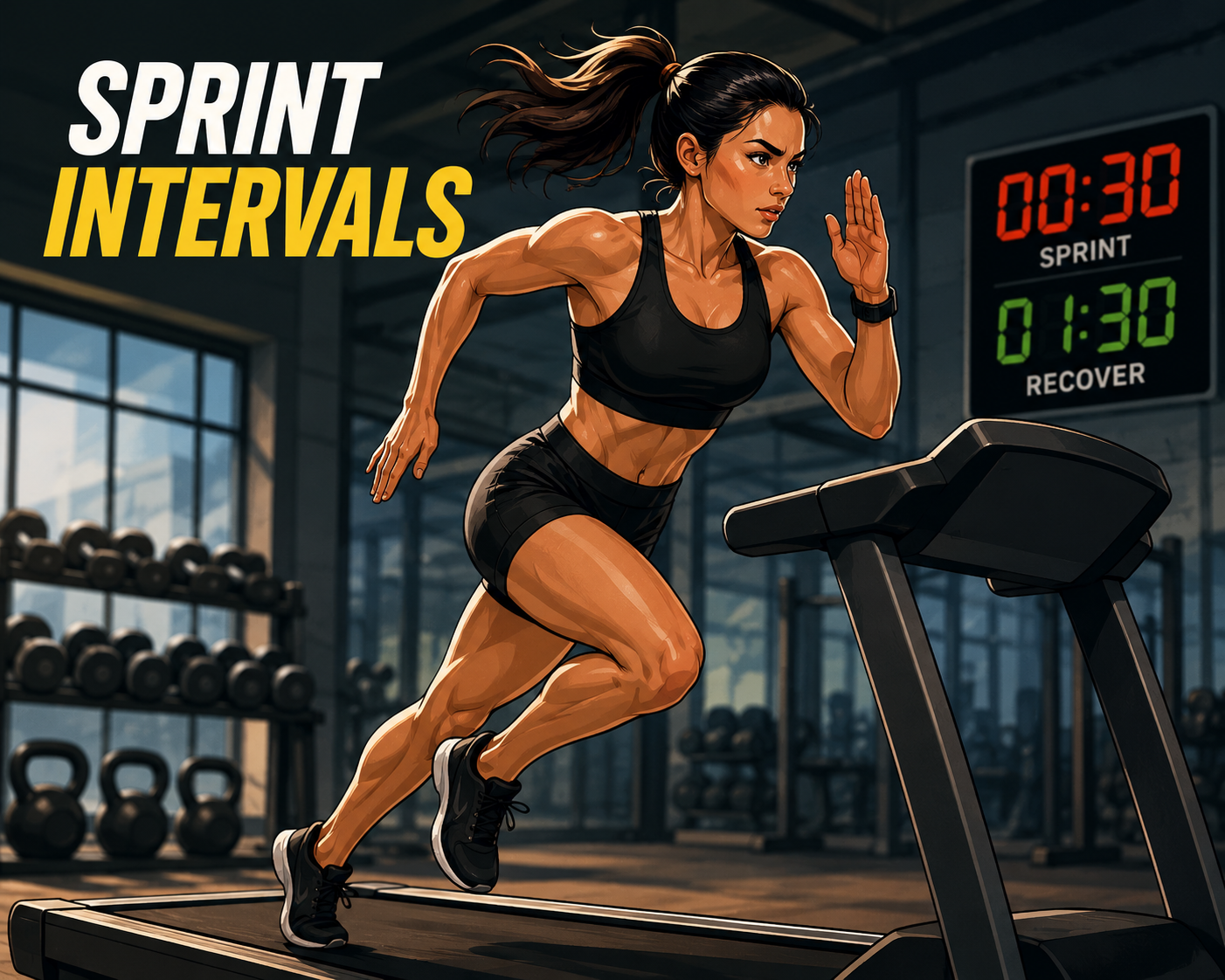
HIIT delivers intense, time-efficient workouts, while steady-state cardio offers sustainable endurance and easier recovery—both can have a place in your fitness routine.
Cardio isn’t one-size-fits-all, and the debate between high-intensity interval training (HIIT) and steady-state cardio has been going on for years. Both burn calories, both improve cardiovascular health, and both have a place in a well-rounded fitness routine — but they work differently, and one might suit your goals, schedule, and body better than the other. Here’s how to actually decide.
What Is HIIT?
High-Intensity Interval Training alternates short bursts of maximum effort with brief recovery periods. A typical HIIT session might involve 30 seconds of all-out sprinting followed by 90 seconds of walking, repeated for 15-20 minutes total.
Examples of HIIT workouts:
- Sprint intervals (30 sec sprint / 90 sec walk, repeated)
- Cycling intervals (high resistance bursts / easy pedaling recovery)
- Bodyweight circuits (burpees, jump squats, mountain climbers in timed rounds)
- Kettlebell or battle rope intervals
What Is Steady-State Cardio?
Steady-state cardio (also called LISS — low-intensity steady state, or MISS at moderate intensity) involves maintaining a consistent effort level for an extended period, typically 30-60 minutes.
Examples of steady-state cardio:
- Jogging or running at a consistent pace
- Cycling at a steady moderate effort
- Swimming laps at an even pace
- Brisk walking or incline treadmill walking
- Elliptical or rowing at consistent moderate intensity
Comparing the Two: Calorie Burn
HIIT burns fewer total calories per session simply because sessions are shorter, but it produces a significantly higher afterburn effect (EPOC) — your body continues burning calories at an elevated rate for hours after the workout ends, sometimes up to 24 hours later.
Steady-state cardio burns more calories during the session itself, especially over longer durations, but has minimal afterburn effect once you stop.
Net effect: total calorie burn between a 20-minute HIIT session and a 45-60 minute steady-state session often ends up fairly comparable when you factor in the afterburn — HIIT is simply more time-efficient.
Comparing the Two: Muscle and Metabolic Impact
HIIT more closely resembles resistance training in its metabolic demands, which can help preserve muscle mass better than prolonged steady-state cardio. It also improves anaerobic capacity and can boost metabolic rate more meaningfully over time due to EPOC.
Steady-state cardio, especially in high volumes, can contribute to muscle loss if not paired with adequate protein intake and strength training, since prolonged aerobic activity draws more from all available fuel sources, including muscle tissue during longer durations.
Comparing the Two: Joint Stress and Recovery
HIIT places significant stress on joints and the nervous system due to its high-intensity nature. It requires more recovery time between sessions — typically 48 hours for the same muscle groups/movement patterns — and carries a higher injury risk if form breaks down under fatigue.
Steady-state cardio is generally easier on joints (particularly walking or cycling) and can be done more frequently with lower injury risk, making it more sustainable for daily activity and active recovery days.
Comparing the Two: Time Efficiency
This is where HIIT clearly wins. A 15-20 minute HIIT session can produce comparable or superior fitness and fat-loss benefits to a 45-60 minute steady-state session, making it ideal for people with limited time.
Which Is Better for Fat Loss?
Research generally shows both are effective for fat loss when total energy expenditure and diet are accounted for — neither has a dramatic, decisive edge over the other in isolation. The “better” choice depends on:
| Factor | Favors HIIT | Favors Steady-State |
|---|---|---|
| Limited time | ✓ | |
| Joint issues/injuries | ✓ | |
| Beginner fitness level | ✓ | |
| Enjoy high intensity | ✓ | |
| Need active recovery days | ✓ | |
| Want to preserve muscle | ✓ | |
| Prefer longer, meditative sessions | ✓ | |
| Limited recovery capacity | ✓ |
Can You Do Both?
Absolutely — and for most people, a combination is ideal. A balanced approach might include:
- 1-2 HIIT sessions per week for efficiency, afterburn effect, and metabolic benefits
- 1-2 steady-state sessions per week for cardiovascular endurance, active recovery, and lower joint stress
- Daily low-intensity movement (walking) to support overall activity levels without adding fatigue
This structure captures the benefits of both without overtraining any single energy system or overloading joints and recovery capacity.
Who Should Be Cautious With HIIT
- Complete beginners to exercise, who should build a base fitness level with steady-state cardio and strength training first
- Those with joint issues or injuries, where high-impact intervals could aggravate existing problems
- People under high life stress, since HIIT is a significant physiological stressor that can compound elevated cortisol levels
- Anyone recovering from illness or overtraining, where the intensity could hinder rather than support recovery
The Bottom Line
Neither HIIT nor steady-state cardio is objectively “better” — they’re different tools suited to different goals, schedules, and recovery capacities. HIIT offers time efficiency and a strong afterburn effect; steady-state cardio offers sustainability, lower joint stress, and easier recovery. For most people, combining both throughout the week — rather than picking one exclusively — delivers the best balance of fat loss, cardiovascular health, and long-term consistency.
About the Author