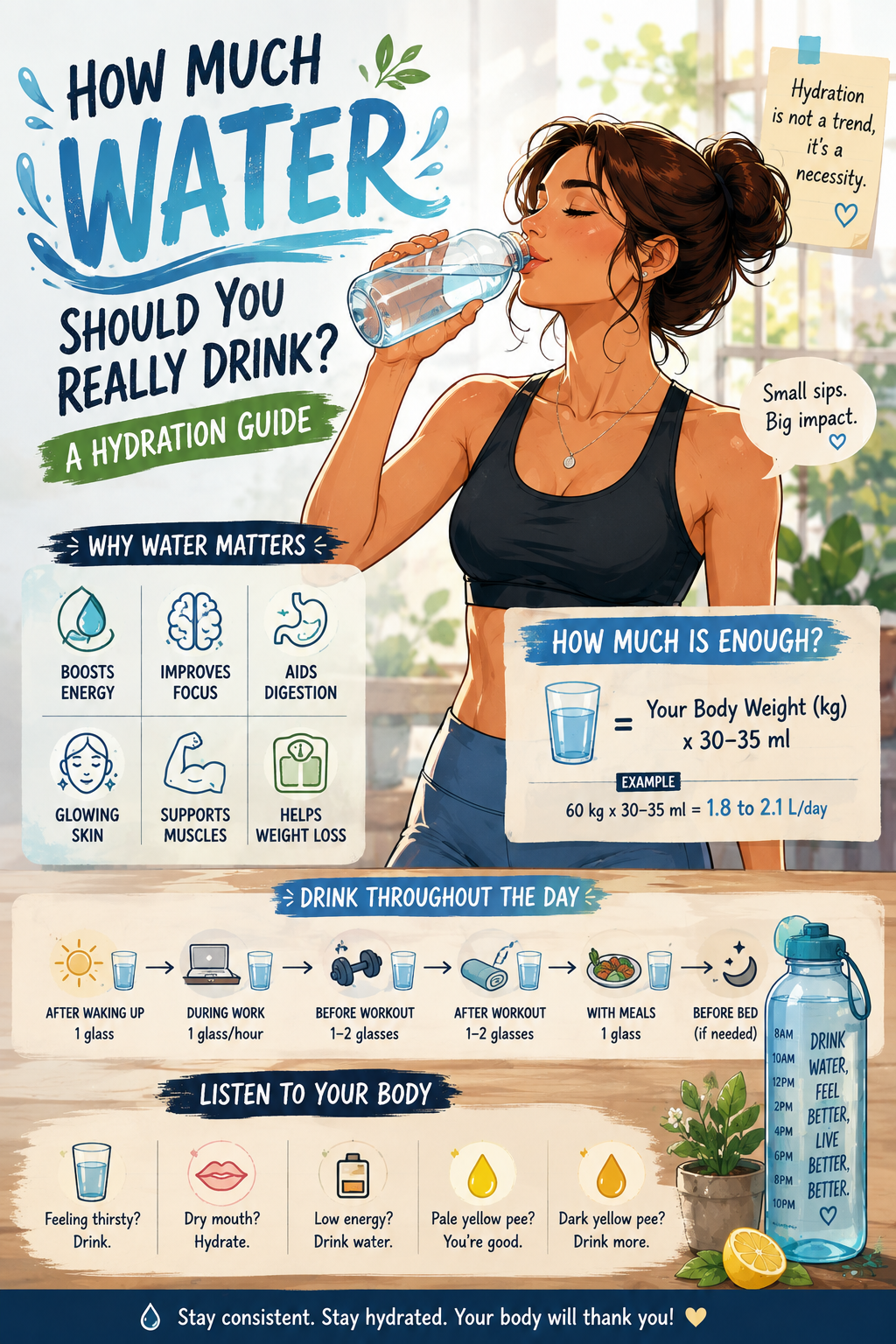
Proper hydration supports energy, digestion, metabolism, exercise performance, and overall health. Learn how much water your body really needs each day.
“Drink eight glasses of water a day” is one of the most repeated pieces of health advice — and one of the least precise. Hydration needs vary significantly based on body size, activity level, climate, and diet, yet most people either underestimate how much they need or rely on outdated one-size-fits-all rules. Here’s what actually matters when it comes to hydration, and how to figure out what your body really needs.
Why Hydration Matters More Than You Think
Water makes up roughly 50-60% of your body weight and is involved in nearly every physiological process:
- – Regulating body temperature through sweat and circulation
- – Transporting nutrients and oxygen to cells
- – Removing waste through kidneys and digestion
- – Lubricating joints and cushioning organs
- – Supporting cognitive function — even mild dehydration measurably impairs concentration, mood, and memory
- – Supporting metabolism and fat loss — water is required for the biochemical processes that break down fat for energy
Even a 1-2% drop in body water can noticeably affect physical performance and mental clarity, which is why hydration deserves more attention than it usually gets.
So, How Much Water Do You Actually Need?
The “8 glasses a day” rule is a reasonable starting point but isn’t personalized. A more accurate general guideline:
Half your body weight (in pounds), in ounces of water per day.
For example, someone weighing 160 lbs would aim for roughly 80 ounces (about 10 cups) daily as a baseline.
This number should increase based on:
- – Exercise: Add 12-16 oz for every 30 minutes of moderate-to-intense activity
- – Hot or humid climates: Increase intake to offset additional sweat loss
- – High altitude: Increases respiratory water loss
- – Pregnancy or breastfeeding: Requires additional fluid intake
- – High-sodium or high-protein diets: Both increase your body’s water requirements
Signs You’re Not Drinking Enough
Thirst is a late indicator of dehydration — by the time you feel thirsty, you’re often already mildly dehydrated. Watch for these earlier signs instead:
- – Dark yellow urine (pale yellow is the target)
- – Fatigue or low energy
- – Headaches
- – Dry mouth or skin
- – Difficulty concentrating
- – Dizziness when standing up quickly
- – Reduced workout performance
Can You Drink Too Much Water?
Yes, though it’s rare. Hyponatremia — a dangerous dilution of sodium in the blood — can occur when water intake is excessive, particularly during endurance events without adequate electrolyte replacement. For most people going about a normal day, this isn’t a realistic concern, but it’s worth being aware of if you’re drinking extremely large volumes in a short period, especially during intense or prolonged exercise.
Does All Fluid Count Toward Hydration?
Mostly, yes. Tea, coffee, milk, and water-rich foods all contribute to daily fluid intake. A few notes:
- – Caffeinated beverages have a mild diuretic effect but still contribute net positive hydration in moderate amounts
- – Water-rich foods like cucumbers, watermelon, oranges, and soups can meaningfully add to your daily intake
- – Alcohol is dehydrating and doesn’t count toward your fluid goals — it’s best offset with extra water
Hydration and Fat Loss
Water plays a more direct role in fat loss than most people realize:
It supports appetite regulation. Thirst is often mistaken for hunger, leading to unnecessary snacking. Drinking water before meals can also promote fullness and reduce calorie intake.
- It supports metabolic processes. Studies show drinking water can temporarily boost metabolic rate through a process called water-induced thermogenesis.
- It improves exercise performance. Even mild dehydration reduces strength, endurance, and workout intensity — directly impacting how effective your training sessions are.
- It aids digestion and reduces bloating. Adequate water intake supports regular digestion, which can affect how “lean” you look day to day.
Practical Tips to Stay Hydrated
- – Start your day with a glass of water before coffee — you wake up mildly dehydrated after hours without fluids
- – Keep a reusable water bottle with you as a visual reminder throughout the day
- – Set intake milestones — aim to finish specific amounts by certain times (e.g., half your goal by lunch)
- – Flavor it naturally with lemon, cucumber, or mint if plain water feels unappealing
- – Pair water with existing habits — drink a glass before each meal or after using the bathroom
- – Monitor urine color as a simple, practical hydration check throughout the day
The Bottom Line
Hydration isn’t just about hitting an arbitrary number of glasses — it’s about matching your intake to your body size, activity level, and environment. Aim for roughly half your body weight in ounces as a baseline, adjust upward for exercise and heat, and use urine color as a simple daily check-in. Staying properly hydrated supports everything from energy and focus to workout performance and fat loss — making it one of the simplest, most impactful habits you can build.
About the Author