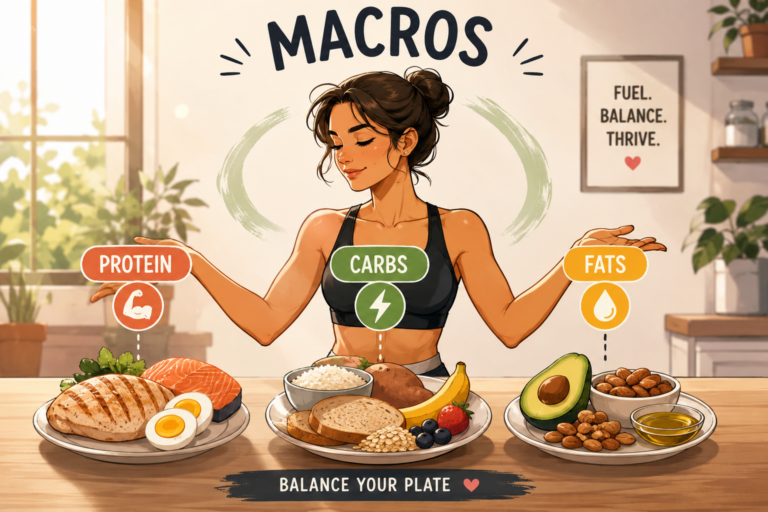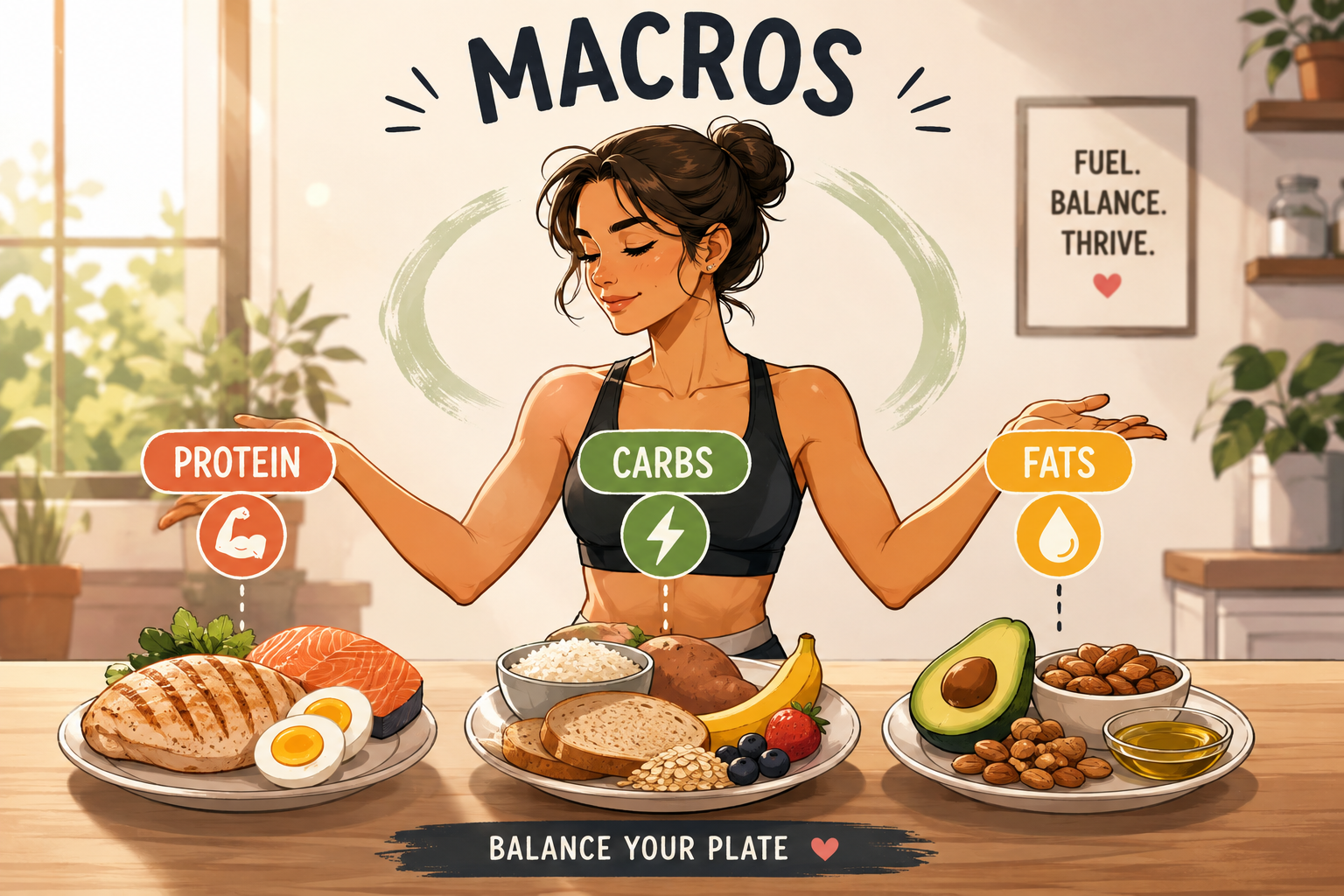
A balanced plate includes the right mix of protein, carbohydrates, and healthy fats to fuel your body, support muscle growth, and maintain long-term health.
If you’ve ever felt overwhelmed trying to figure out what to eat, you’re not alone. Diet culture throws around terms like “low-carb,” “high-protein,” and “keto” so often that the basics get lost. Understanding macronutrients — protein, carbohydrates, and fats — is the foundation that makes every other nutrition decision easier. Once you understand what each one does, you can build a diet that actually works for your goals instead of following trends blindly.
What Are Macronutrients?
Macronutrients are the three nutrients your body needs in large amounts to function: protein, carbohydrates, and fats. Each provides energy (measured in calories) and plays a distinct role in your body.
- * Protein: 4 calories per gram
- * Carbohydrates: 4 calories per gram
- * Fats: 9 calories per gram
Unlike micronutrients (vitamins and minerals), which your body needs in small amounts, macronutrients form the bulk of your daily caloric intake and directly affect energy levels, muscle growth, hormone production, and satiety.
Protein: The Building Block
Protein is essential for repairing and building muscle tissue, producing enzymes and hormones, and supporting immune function. It’s also the most satiating macronutrient, meaning it keeps you full longer and helps control appetite.
Good sources: chicken, fish, eggs, Greek yogurt, lentils, chickpeas, tofu, paneer, cottage cheese
How much do you need? A general guideline for active individuals is 0.7-1 gram of protein per pound of body weight per day. Someone weighing 150 lbs might aim for 105-150g daily, spread across meals for optimal muscle protein synthesis.
Why it matters for fat loss: Protein has a higher thermic effect than carbs or fat, meaning your body burns more calories digesting it. It also helps preserve lean muscle mass during a calorie deficit, which keeps your metabolism from slowing down as much.
Carbohydrates: Your Body’s Preferred Fuel
Carbs get an unfair reputation, but they’re your body’s primary and most efficient energy source, especially for your brain and during high-intensity exercise. The key distinction isn’t “carbs are bad” — it’s quality and quantity.
Complex carbs (whole grains, oats, brown rice, sweet potatoes, legumes) digest slowly, provide sustained energy, and come packed with fiber and micronutrients.
Simple carbs (white bread, sugary snacks, soda) digest quickly, spike blood sugar, and offer little nutritional value beyond quick energy.
How much do you need? This varies widely based on activity level and goals, but a reasonable starting point for most people is 45-55% of total daily calories from carbohydrates, prioritizing complex sources.
Why it matters for fat loss: Cutting carbs too aggressively often backfires — it can tank energy levels, disrupt workouts, and lead to binge eating. Fiber-rich carbs actually support fat loss by improving digestion and satiety.
Fats: Essential, Not Optional
Dietary fat is crucial for hormone production (including testosterone and estrogen), vitamin absorption (A, D, E, K are fat-soluble), and cell membrane health. Low-fat diets popular in past decades often left people fatigued and hormonally imbalanced.
Healthy sources: avocados, olive oil, nuts, seeds, fatty fish (salmon, mackerel), whole eggs
Fats to limit: trans fats and heavily processed vegetable oils found in packaged snacks and fried foods
How much do you need? Aim for roughly 20-35% of total daily calories from fat, prioritizing unsaturated sources over saturated and avoiding trans fats almost entirely.
Why it matters for fat loss: Despite having more calories per gram, adequate fat intake supports hormone function that’s critical for sustainable fat loss — cutting fat too low can disrupt metabolism and mood.
Finding Your Macro Balance
There’s no single “perfect” ratio — it depends on your goals, activity level, and how your body responds. That said, here are a few common starting frameworks:
| Goal | Protein | Carbs | Fat |
|---|---|---|---|
| General health | 25-30% | 40-50% | 25-30% |
| Fat loss | 30-35% | 35-40% | 25-30% |
| Muscle building | 25-30% | 45-50% | 20-25% |
A simple way to start: rather than obsessing over exact percentages, build each plate around a palm-sized portion of protein, a fist-sized portion of complex carbs, and a thumb-sized portion of healthy fats, then fill the rest with vegetables.
Common Mistakes to Avoid
- * Cutting out an entire macro group. Extremely low-carb or low-fat diets are hard to sustain and often lead to nutrient deficiencies.
- * Ignoring portion sizes. “Healthy” fats like nuts and olive oil are calorie-dense — overeating them can stall fat loss even though they’re nutritious.
- * Under-eating protein. Many people, especially those focused on cardio, don’t eat nearly enough protein to support muscle retention during weight loss.
- * Chasing perfection. Hitting your macros within a reasonable range consistently matters far more than perfect precision every single day.
The Bottom Line
Macronutrients aren’t something to fear or obsess over — they’re simply the framework your body uses for energy and repair. Protein builds and preserves, carbs fuel performance, and fats support hormones and long-term health. Instead of eliminating a macro group entirely, focus on quality sources and portions that align with your goals, and adjust based on how your body responds over time.
About the Author