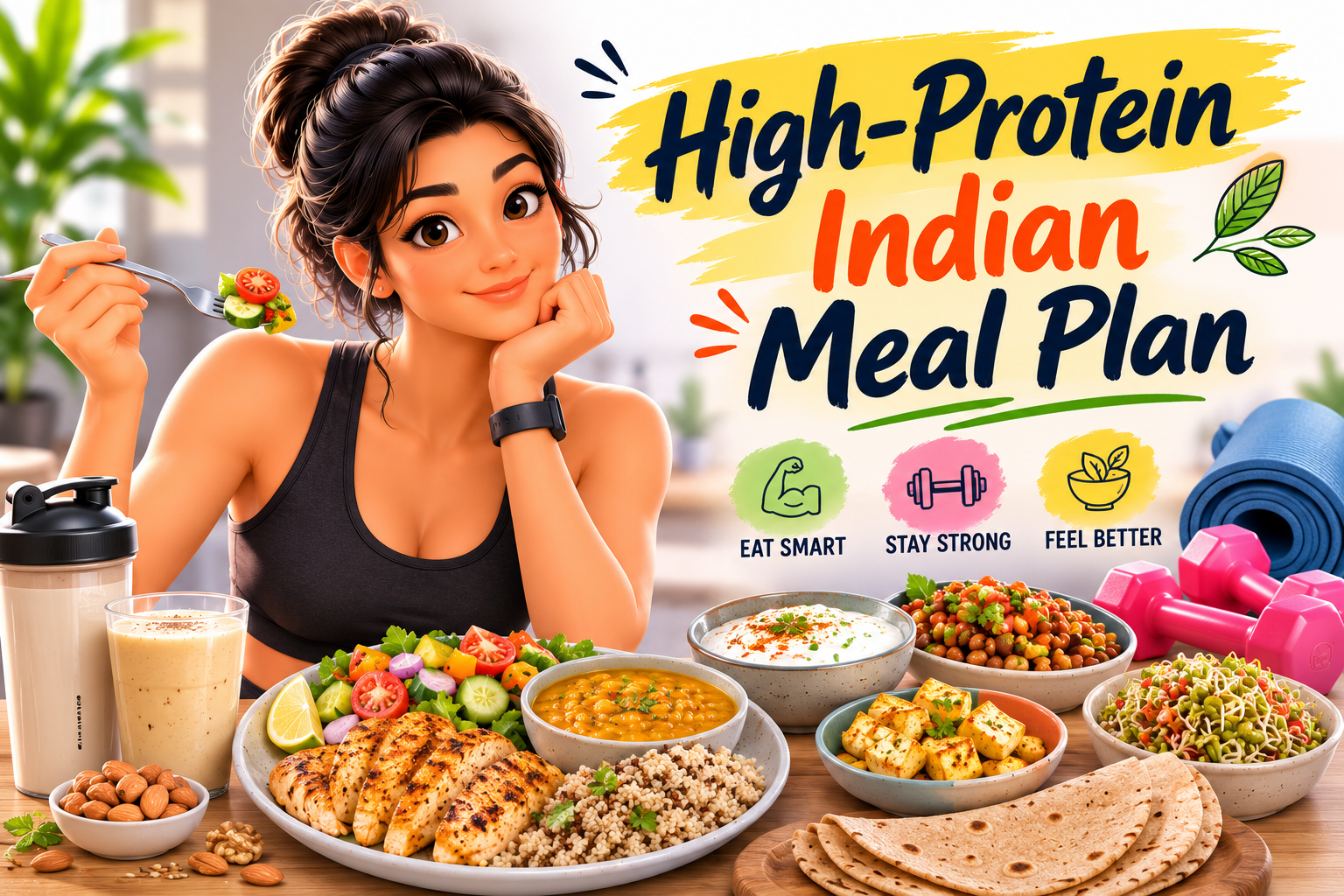
high-protein-indian-meal-plan
When most people think about eating more protein, they imagine expensive supplements or complicated meal plans.
The truth is, Indian cuisine already includes many naturally protein-rich foods. With a little planning, you can easily meet your daily protein needs using everyday ingredients found in most Indian kitchens. Whether your goal is building muscle, supporting recovery after workouts, maintaining a healthy weight, or simply improving your overall nutrition, a balanced high-protein diet can make a significant difference.
In this guide, you’ll learn how to build a practical Indian meal plan that is nutritious, affordable, and easy to follow.
Affiliate Disclosure: Some links on EatWorkFit may be affiliate links. If you purchase through these links, we may earn a small commission at no additional cost to you. Our recommendations are based on quality, value, and suitability for different lifestyles.
Why Is Protein Important?
Protein helps your body:
- – Build and repair muscles
- – Support recovery after exercise
- – Maintain healthy bones
- – Produce enzymes and hormones
- – Support immunity
- – Keep you feeling fuller for longer
If you’re physically active, eating enough protein becomes even more important.
How Much Protein Do You Need?
Your daily protein requirement depends on:
- – Body weight
- – Activity level
- – Fitness goals
- – Age
General guideline:
| Goal | Daily Protein |
|---|---|
| Sedentary Adult | 0.8 g/kg |
| Regular Exercise | 1.2–1.6 g/kg |
| Strength Training | 1.6–2.2 g/kg |
| Fat Loss with Exercise | 1.6–2.4 g/kg |
Example:
A person weighing 70 kg who performs regular strength training may aim for approximately 112–154 g of protein per day.
Best High-Protein Indian Foods
Animal-Based
| Food | Approximate Protein |
| Chicken Breast (100 g) | 31 g |
| Fish (100 g) | 20–25 g |
| Eggs (1 large) | 6–7 g |
| Greek Yogurt (100 g) | 10 g |
| Milk (250 ml) | 8 g |
Vegetarian
| Food | Approximate Protein |
| Paneer (100 g) | 18 g |
| Tofu (100 g) | 8–10 g |
| Cooked Lentils (1 cup) | 17–18 g |
| Chickpeas (1 cup) | 14–15 g |
| Rajma (1 cup) | 15 g |
| Soy Chunks (50 g dry) | ~26 g |
| Peanuts (30 g) | 7–8 g |
| Almonds (30 g) | 6 g |
Sample High-Protein Indian Meal Plan
🌅 Breakfast
Choose one:
- – Vegetable omelette (3 eggs) + whole wheat toast
- – Greek yogurt with fruits and nuts
- – Moong dal chilla with curd
- – Oats cooked in milk with nuts and seeds
Protein: 25–30 g
☀ Mid-Morning Snack
- – Handful of roasted chana
- – Greek yogurt
- – Milk
- – Protein smoothie
Protein: 10–20 g
🍛 Lunch
Non-Vegetarian
- – Grilled chicken breast
- – Brown rice or roti
- – Mixed vegetables
- – Dal
Vegetarian
- – Paneer or tofu curry
- – Brown rice or roti
- – Dal
- – Salad
Protein: 35–40 g
☕ Evening Snack
Choose one:
- – Whey protein shake
- – Roasted peanuts
- – Sprouts chaat
- – Boiled eggs
- – Cottage cheese cubes
Protein: 15–25 g
🌙 Dinner
Non-Vegetarian
- – Fish curry or grilled chicken
- – Vegetables
- – Dal
Vegetarian
- – Soy chunk curry
- – Mixed vegetables
- – Roti
- – Dal
Protein: 30–40 g
Weekly Grocery List
Protein Sources
- – Eggs
- – Chicken
- – Fish
- – Paneer
- – Tofu
- – Greek yogurt
- – Milk
- – Soy chunks
- – Lentils
- – Chickpeas
- – Rajma
– Healthy Carbohydrates
- – Brown rice
- – Whole wheat flour
- – Oats
- – Sweet potatoes
Healthy Fats
- – Almonds
- – Walnuts
- – Peanuts
- – Seeds
Vegetables
- – Spinach
- – Broccoli
- – Carrots
- – Beans
- – Capsicum
- – Tomatoes
- – Cucumber
Fruits
- – Bananas
- – Apples
- – Oranges
- – Berries (when available)
- – Papaya
Budget-Friendly High-Protein Foods
Eating high protein doesn’t have to be expensive.
Affordable options include:
- – Eggs
- – Milk
- – Curd
- – Soy chunks
- – Lentils
- – Roasted chana
- – Peanuts
- – Seasonal fish
- – Chicken bought in bulk
Do You Need Protein Powder?
Not necessarily.
Whole foods should always be your primary source of nutrition.
Protein powder may be useful if:
- – You struggle to meet your protein target.
- – You have a busy schedule.
- – You want a convenient post-workout option.
- – You’re travelling.
EatWorkFit Choice ⭐
For most people, the best approach is:
🥚 Prioritise whole-food protein.
🥛 Use protein powder only when needed.
🥗 Include protein in every meal.
💧 Stay hydrated.
🏋️ Combine good nutrition with regular exercise.
Consistency is more important than perfection.
Common Mistakes to Avoid
❌ Skipping breakfast
❌ Eating most of your protein in one meal
❌ Depending only on supplements
❌ Ignoring vegetables and fibre
❌ Not drinking enough water
Frequently Asked Questions
Can vegetarians get enough protein?
Yes. Foods like lentils, paneer, tofu, soy chunks, dairy products, and legumes provide excellent protein.
Is whey protein necessary?
No. It’s optional and should supplement a balanced diet rather than replace whole foods.
Can I build muscle on an Indian diet?
Absolutely. With adequate protein, progressive training, and sufficient calories, an Indian diet can fully support muscle growth.
Is dal a good source of protein?
Yes. Dal contributes valuable protein, especially when combined with other protein-rich foods throughout the day.
Should I eat protein after a workout?
Including protein after exercise can help support muscle recovery, but your total daily protein intake is generally more important than the exact timing.
Final Verdict
A high-protein Indian diet doesn’t require expensive ingredients or complicated recipes.
By planning your meals around quality protein sources and eating a balanced variety of foods, you can support your fitness goals while enjoying familiar Indian cuisine.
Start with simple changes:
- – Add protein to every meal.
- – Choose whole foods whenever possible.
- – Stay consistent.
- – Use supplements only when needed.
Small daily improvements often lead to lasting results.
About the Author