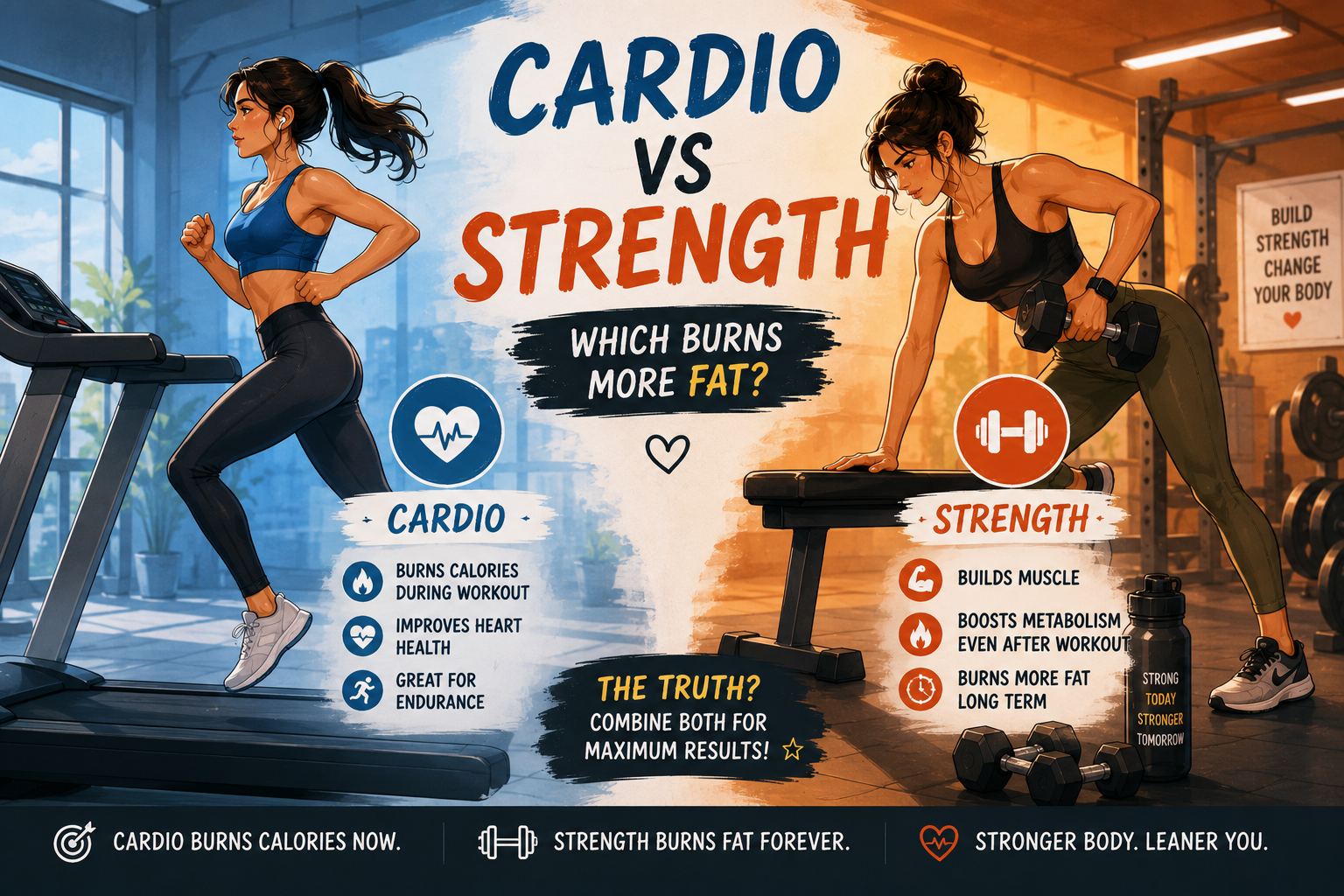
Cardio burns more calories during your workout, while strength training builds lean muscle and boosts metabolism for long-term fat loss. Combining both offers the best results.
It’s one of the most debated questions in fitness: should you spend your gym time on the treadmill or the weight rack? The truth is, the “cardio vs strength training” framing is a bit of a false choice — both play distinct, complementary roles in fat loss. But understanding how each one actually works can help you build a smarter, more effective routine instead of just guessing.
How Cardio Burns Fat
Cardiovascular exercise — running, cycling, swimming, rowing — burns calories primarily during the activity itself. The higher the intensity and longer the duration, the more calories burned in that session.
Strengths of cardio:
- – Burns a high number of calories per session, especially at higher intensities
- – Improves cardiovascular health, endurance, and lung capacity
- – Requires minimal equipment (running, cycling outdoors)
- – Effective for improving mood and reducing stress through endorphin release
Limitations of cardio:
- – Calorie burn largely stops once the session ends (minimal afterburn effect compared to strength training)
- – Excessive cardio without adequate protein/strength training can lead to muscle loss alongside fat loss
- – Doesn’t reshape body composition the way strength training does — you may get smaller without getting more defined
- – Can become repetitive and harder to progressively overload compared to lifting
How Strength Training Burns Fat
Strength training builds muscle, and muscle is metabolically active tissue — it burns calories even at rest. Unlike cardio, the fat-burning effects of strength training extend well beyond the workout itself.
Strengths of strength training:
- – Triggers EPOC (excess post-exercise oxygen consumption), meaning your body burns more calories for hours after your session ends
- – Builds and preserves lean muscle mass, increasing your resting metabolic rate over time
- – Reshapes body composition — creating visible definition and tone, not just a smaller frame
- – Protects against muscle loss during a calorie deficit, which cardio alone doesn’t do
Limitations of strength training:
- – Burns fewer calories per session compared to high-intensity cardio
- – Requires access to equipment or resistance for meaningful progression over time
- – Results (visible muscle definition) take longer to appear than the scale changes from cardio
What Does the Research Actually Say?
Most comparative studies point to a similar conclusion: cardio burns more calories in the moment, but strength training has a greater long-term impact on metabolism and body composition. Neither wins outright — they serve different purposes:
- – Cardio is more efficient for burning calories quickly within a session and improving cardiovascular fitness
- – Strength training is more efficient for changing what your body looks like and sustaining metabolic rate over time
Research also consistently shows that combining both produces better fat loss and body composition outcomes than either one alone.
Which Should You Prioritize?
It depends on your specific goal:
| Goal | Priority |
|---|---|
| Quick calorie burn / event training (e.g. race) | Cardio-focused |
| Long-term fat loss + toned appearance | Strength-focused with cardio support |
| Muscle building | Strength-focused, minimal cardio |
| General health and longevity | Balanced mix of both |
| Limited time, want max return | Strength training (efficiency + afterburn) |
For most people whose goal is general fat loss and a leaner, more defined body — not just a lower number on the scale — strength training should be the priority, with cardio used to support it, not replace it.
A Balanced Weekly Approach
A well-rounded routine for fat loss might look like:
- – 3 strength training sessions/week — full-body or upper/lower split
- – 2 cardio sessions/week — mix of steady-state (30-40 min moderate pace) and one higher-intensity interval session
- – 1-2 rest or active recovery days — light walking, stretching, or yoga
This structure captures the metabolic benefits of muscle building while still getting the cardiovascular and calorie-burning benefits of cardio.
Common Mistakes People Make
- – Doing cardio exclusively and skipping weights, leading to muscle loss and a “skinny fat” appearance despite scale – progress
- – Doing excessive cardio in a deep calorie deficit, which increases the risk of losing muscle along with fat
- – Neglecting cardio entirely, missing out on cardiovascular health benefits and calorie burn efficiency
- – Not adjusting intensity over time — progression matters in both cardio and strength training, not just one
The Bottom Line
Cardio and strength training aren’t competitors — they’re tools that do different jobs. Cardio burns calories efficiently in the moment and strengthens your heart and lungs; strength training reshapes your body and keeps your metabolism working harder around the clock. For most people chasing sustainable fat loss, the smartest approach isn’t choosing one over the other — it’s combining both, with strength training as the foundation.
About the Author