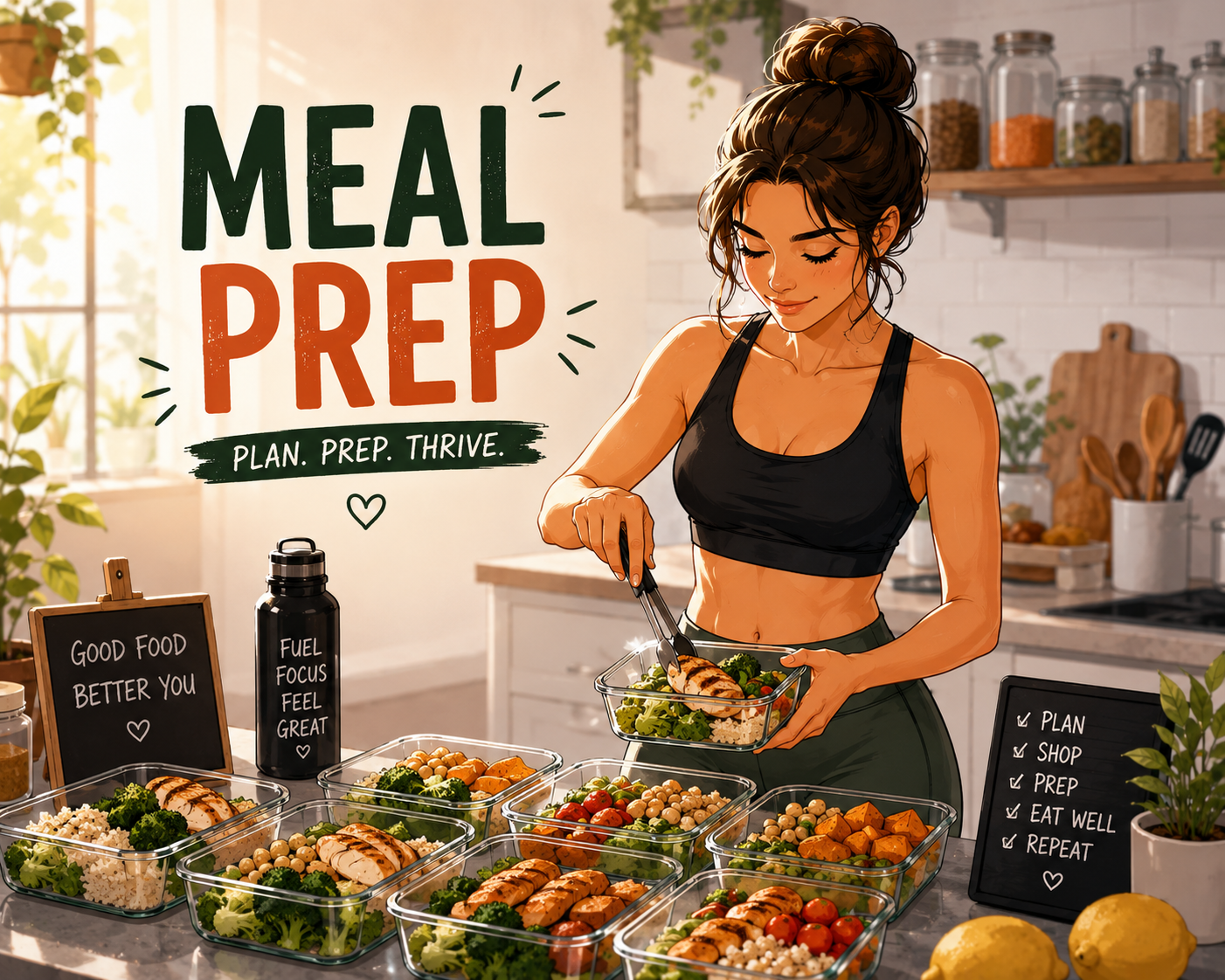
Meal prepping helps you save time, eat healthier, reduce food waste, and stay consistent with your nutrition goals throughout the week.
Ask anyone who’s successfully lost weight or built muscle what habit made the biggest difference, and meal prep almost always comes up. It’s not glamorous, but it removes the single biggest obstacle to eating well: decision fatigue at the moment you’re hungry, tired, and reaching for whatever’s fastest. This guide walks you through exactly how to start meal prepping, even if you’ve never done it before.
Why Meal Prep Works
1. It eliminates impulsive food decisions. When healthy food is already made and accessible, you’re far less likely to order takeout or grab something processed simply because it’s convenient.
2. It saves time overall. Cooking five portions of chicken at once takes barely longer than cooking one, meaning you save hours across the week compared to cooking every meal from scratch daily.
3. It supports portion control. Pre-portioning meals removes the guesswork around serving sizes, which is especially helpful if you’re tracking calories or macros.
4. It reduces food waste and grocery spend. Planning meals in advance means buying only what you need, rather than impulse purchases that go unused.
5. It builds consistency. Consistency, more than perfection, is what drives long-term results in nutrition. Meal prep makes healthy eating the default rather than something requiring daily willpower.
Step 1: Plan Before You Shop
Before buying anything, decide:
- – How many meals you’re prepping (all meals, or just lunches/dinners?)
- – How many days you’re prepping for (3-4 days is easier for beginners than a full 7)
- – Your calorie/macro targets, if you’re tracking
- – Recipes — pick 2-3 simple recipes rather than a different meal every day; variety can come from swapping proteins, sauces, or vegetables within a base formula
Step 2: Build Meals Around a Simple Formula
The easiest way to meal prep without overcomplicating things is to build each meal around three components:
Protein (palm-sized portion): chicken breast, ground turkey, tofu, salmon, eggs, lentils, paneer
Complex carb (fist-sized portion): brown rice, quinoa, sweet potato, whole wheat pasta, oats
Vegetables (fill the rest of the plate): broccoli, spinach, bell peppers, zucchini, roasted mixed vegetables
Mix and match these across the week for variety without needing entirely different recipes each day. A rotation of 2-3 proteins, 2 carbs, and 3-4 vegetables can create over a dozen meal combinations.
Step 3: Shop with a List
Buying in bulk and sticking to a list prevents impulse purchases and wasted food. A sample beginner shopping list:
Proteins: chicken breast, eggs, canned tuna, Greek yogurt, tofu
Carbs: brown rice, oats, sweet potatoes, whole wheat wraps
Vegetables: broccoli, spinach, bell peppers, carrots, onions
Healthy fats: olive oil, avocado, almonds
Staples: garlic, spices, low-sodium sauces, lemon
Step 4: Cook in Batches
Set aside 1-2 hours, typically on a weekend, to batch cook. A simple approach:
- 1. Roast a tray of vegetables while proteins cook — efficient use of oven time
- 2. Cook a large batch of a carb source (rice cooker or instant pot makes this easier)
- 3. Grill, bake, or pan-sear proteins in bulk — season differently across batches for variety (e.g., half the chicken with paprika and garlic, half with lemon herb)
- 4. Prepare a couple of sauces or dressings to keep meals from tasting repetitive
Step 5: Store Properly
- – Use airtight containers — glass containers reheat better and don’t stain or retain odors like plastic
- – Cool food before sealing containers to prevent condensation and sogginess
- – Most cooked meals last 3-4 days in the fridge; freeze portions beyond that for later in the week
- – Store sauces and dressings separately from ingredients like salads to prevent everything from getting soggy
Sample 3-Day Meal Prep Plan
| Meal | Day 1-3 Rotation |
|---|---|
| Breakfast | Overnight oats with Greek yogurt and berries |
| Lunch | Grilled chicken, brown rice, roasted broccoli |
| Dinner | Baked salmon, sweet potato, sautéed spinach |
| Snack | Hard-boiled eggs, almonds, or fruit |
Common Meal Prep Mistakes to Avoid
- – Overcomplicating recipes. Elaborate meals are harder to prep in bulk and more likely to get abandoned after a week.
- – Not accounting for variety. Eating the exact same meal daily leads to burnout — rotate sauces, spices, and vegetables to keep things interesting.
- – Prepping too much too soon. Start with 3-4 days rather than committing to a full week immediately; build the habit before scaling up.
- – Ignoring food safety. Always cool food before refrigerating, and don’t leave prepped meals unrefrigerated for extended periods.
- – Skipping the planning step. Prepping without a plan often leads to random, unbalanced meals that don’t actually save time or support your goals.
The Bottom Line
Meal prep isn’t about rigid, joyless eating — it’s a system that removes friction from making healthy choices during a busy week. Start small with a simple protein-carb-vegetable formula, prep just 3-4 days at a time as you build the habit, and adjust based on what actually fits your schedule and taste preferences. Once it becomes routine, it’s one of the most reliable tools for staying consistent with your nutrition goals.
About the Author