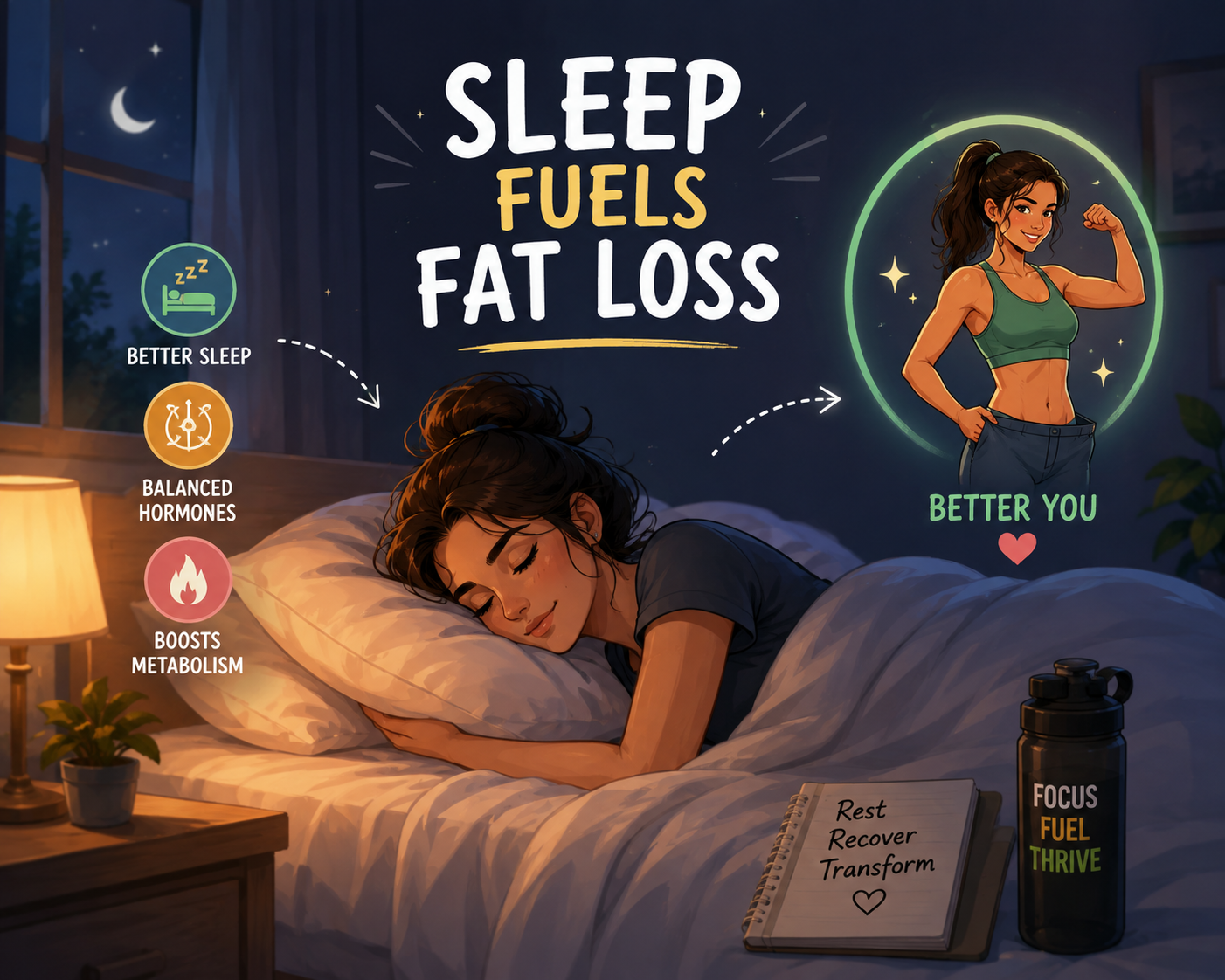
Quality sleep supports hormone balance, boosts metabolism, improves recovery, and plays a vital role in healthy, sustainable weight loss.
You can eat perfectly and train hard, but if you’re skimping on sleep, you’re working against yourself. Sleep is often the most overlooked factor in weight management — overshadowed by diet trends and workout plans — yet the research on how poor sleep sabotages fat loss is substantial. If you’ve hit a plateau despite doing everything “right,” your sleep habits might be the missing piece.
Why Sleep Affects Weight
Sleep isn’t just downtime for your brain. It’s when your body regulates hormones, repairs tissue, and processes the day’s metabolic activity. When sleep is cut short or disrupted, several systems that control hunger, energy use, and fat storage go off balance.
1. Sleep Deprivation Disrupts Hunger Hormones
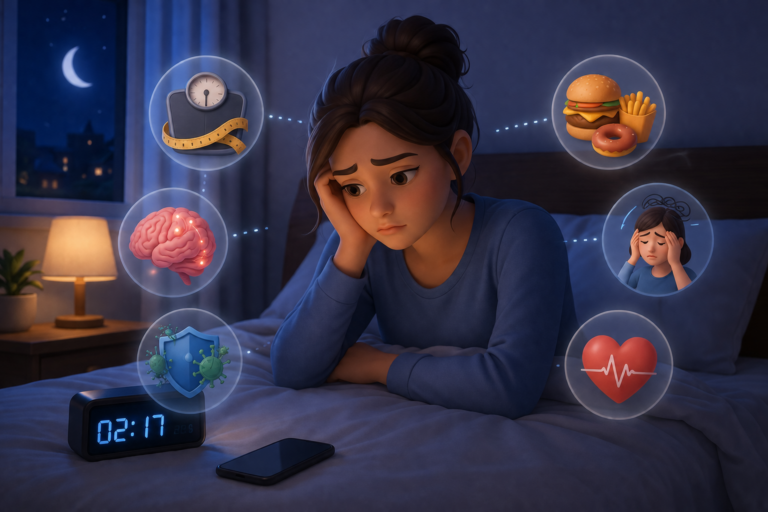
Two key hormones control appetite: ghrelin, which signals hunger, and leptin, which signals fullness. Studies consistently show that insufficient sleep increases ghrelin and decreases leptin — meaning you feel hungrier and less satisfied after eating, even if your calorie intake hasn’t changed. This is one of the biggest reasons sleep-deprived people tend to overeat, particularly reaching for high-calorie, high-carb comfort foods.
2. It Increases Cravings for Unhealthy Foods
Poor sleep doesn’t just make you hungrier — it changes what you crave. Sleep deprivation heightens activity in brain regions associated with reward-seeking behavior while dulling the prefrontal cortex, the area responsible for impulse control and decision-making. The result is a brain that’s both more drawn to junk food and less equipped to resist it.
3. It Raises Cortisol Levels
Chronic sleep loss elevates cortisol, your primary stress hormone. Elevated cortisol promotes fat storage, particularly visceral fat around the abdomen, and can also increase appetite and cravings for sugary, energy-dense foods as your body seeks quick fuel.
4. It Reduces Insulin Sensitivity
Even a few nights of poor sleep can measurably reduce insulin sensitivity, making it harder for your body to process carbohydrates efficiently. Over time, this contributes to increased fat storage and raises the risk of metabolic issues like type 2 diabetes.
5. It Lowers Motivation and Energy for Exercise
It’s hard to push through a tough workout — or even want to work out at all — when you’re running on five hours of sleep. Sleep deprivation reduces physical performance, reaction time, and endurance, making workouts feel harder and less effective, which can lead to skipped sessions altogether.
6. It Can Reduce Fat Loss Even in a Calorie Deficit
Perhaps most striking: research has shown that when people are in a calorie deficit, those who are sleep-deprived lose significantly less fat and more muscle compared to those who are well-rested, even when calorie intake is identical. Sleep essentially determines what your body loses when you’re losing weight.
How Much Sleep Do You Actually Need?
Most adults need 7-9 hours of quality sleep per night. It’s not just about duration, though — sleep quality matters just as much. Frequent waking, poor sleep environment, and inconsistent sleep schedules can undermine even a full 8 hours.
How to Improve Sleep for Better Fat Loss Results
- 1. Keep a consistent sleep schedule. Going to bed and waking up at the same time daily — even on weekends — helps regulate your circadian rhythm and improves sleep quality over time.
- 2. Limit screens before bed. Blue light from phones and laptops suppresses melatonin production. Try to stop screen use 30-60 minutes before sleep, or use night mode settings.
- 3. Watch your caffeine timing. Caffeine has a half-life of roughly 5-6 hours, meaning that afternoon coffee could still be affecting your sleep at night. Cut off caffeine intake by early-to-mid afternoon.
- 4. Avoid heavy meals and alcohol close to bedtime. Both can disrupt sleep architecture — alcohol may help you fall asleep faster but reduces deep, restorative sleep later in the night.
- 5. Create a cool, dark sleep environment. Your body sleeps best in a slightly cool room (around 65-68°F) with minimal light and noise.
- 6. Get morning sunlight exposure. Natural light exposure early in the day helps anchor your circadian rhythm, making it easier to fall asleep at night.
- 7. Manage stress before bed. Journaling, light stretching, or breathing exercises can help lower cortisol and ease the transition into sleep.
The Bottom Line
Sleep isn’t a passive activity you can shortchange without consequences — it’s an active driver of your hormones, cravings, energy, and ultimately, your ability to lose fat and build muscle. No diet or workout plan can fully compensate for chronic sleep deprivation. If your results have stalled despite consistent effort elsewhere, prioritizing 7-9 hours of quality sleep might be the single most impactful change you can make.
About the Author