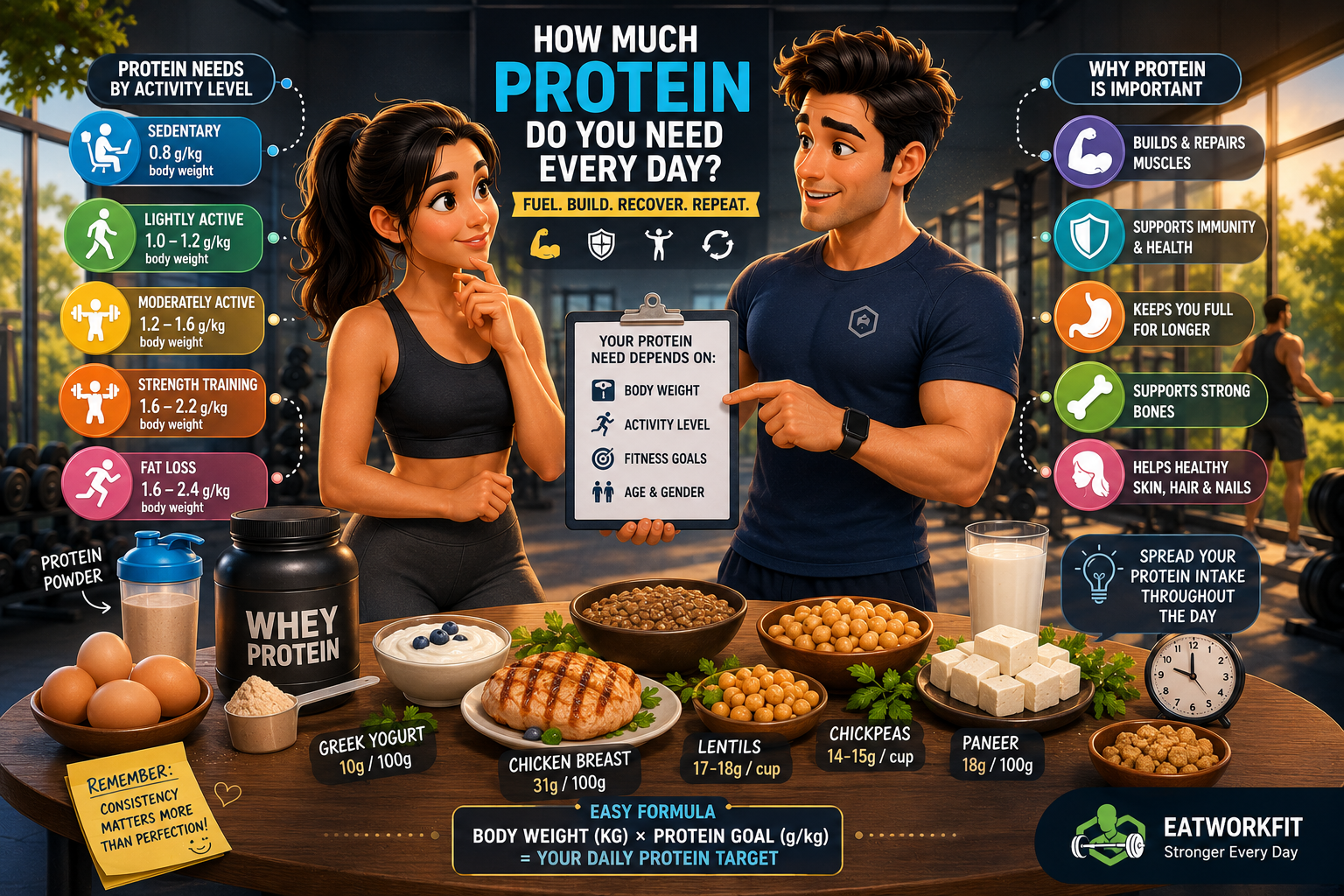
A balanced selection of protein-rich foods to help meet your daily nutrition and fitness goals.
Protein Needs for Weight Loss
Many people think eating less is the key to losing weight. While creating a calorie deficit is important, getting enough protein is equally important. When you’re trying to lose weight, protein can help:
- – Support muscle maintenance while losing body fat
- – Increase feelings of fullness, making it easier to manage hunger
- – Support recovery if you’re exercising regularly
For people combining a calorie-controlled diet with resistance training, protein intakes in the range of 1.6–2.4 g per kilogram of body weight per day are often recommended, depending on individual circumstances and goals.
Example
A person weighing 70 kg may aim for approximately:
70 × 1.6 = 112 g of protein/day
or, if appropriate,
70 × 2.0 = 140 g of protein/day
Remember, the right target depends on your overall diet, activity level, and health status.
Protein for Muscle Gain
Protein provides the amino acids your body uses to repair and build muscle after resistance training. For many people doing regular strength training, a daily intake of around 1.6–2.2 g/kg is a practical target.
Example
Weight = 80 kg
Protein target:
80 × 1.8 = 144 grams/day
Protein alone won’t build muscle.
You also need:
✔ Progressive strength training
✔ Sufficient calories
✔ Quality sleep
✔ Consistency over time
Protein Needs for Women
Women need protein just as much as men.
Protein supports:
- – Muscle maintenance
- – Bone health
- – Recovery after exercise
- – Healthy skin and hair
- – General wellbeing
Many active women benefit from protein intakes based on their activity level rather than following a one-size-fits-all number.
Example
A woman weighing 60 kg who exercises regularly might aim for approximately:
60 × 1.4 = 84 grams/day
The exact amount depends on her goals and training routine.
Protein Needs for Men
Men generally require more total protein than women only because they often have greater body weight and muscle mass—not because men inherently need more protein.
Example
A man weighing 82 kg who strength trains may aim for:
82 × 1.8 = 148 grams/day
Always base your calculation on body weight and activity level, not gender alone.
Protein Needs for Older Adults
As we age, maintaining muscle becomes increasingly important for mobility, balance, and independence.
Older adults may benefit from higher protein intakes than the basic recommendation, especially when combined with regular resistance exercise. Individual needs vary, and people with medical conditions should seek personalised advice from a healthcare professional.
Good protein sources include:
- – Eggs
- – Fish
- – Chicken
- – Greek yogurt
- – Milk
- – Lentils
- – Beans
- – Soy products
High-Protein Indian Food Chart
| Food | Approximate Protein |
|---|---|
| Chicken Breast (100 g) | 31 g |
| Fish (100 g) | 20–25 g |
| Eggs (1 large) | 6–7 g |
| Greek Yogurt (100 g) | 10 g |
| Milk (250 ml) | 8 g |
| Paneer (100 g) | 18 g |
| Tofu (100 g) | 8–10 g |
| Cooked Lentils (1 cup) | 17–18 g |
| Chickpeas (1 cup) | 14–15 g |
| Soy Chunks (50 g dry) | ~26 g |
| Peanuts (30 g) | 7–8 g |
| Almonds (30 g) | 6 g |
Protein values are approximate and may vary by brand, preparation method, and serving size.
Sample One-Day High-Protein Meal Plan
| Breakfast | Mid-Morning Snack | Lunch | Evening Snack | Dinner |
| – 3 eggs – 1 bowl Greek yogurt – Fresh fruit Approx. Protein: 28–30 g | – Handful of almonds – Milk Approx. Protein: 14 g | – Grilled chicken or fish – Rice or roti – Mixed vegetables Approx. Protein: 35–4 | – Whey protein shake or – Greek yogurt with nuts Approx. Protein: 20–25 g | – Chicken, fish, tofu, or paneer – Vegetables – Dal Approx. Protein: 35–40 g |
Estimated Total: Around 130–145 g, depending on portion sizes and food choices.
Adjust portions based on your own protein target and calorie needs.
Do You Need Protein Powder?
Not necessarily. Many people can meet their daily protein needs through whole foods alone. Protein powder can be useful when:
- – You’re unable to meet your protein goal through food.
- – You have a busy lifestyle.
- – You need a convenient post-workout option.
- – You’re travelling.
- – You have increased protein requirements due to your training.
Think of protein powder as a supplement to a balanced diet—not a replacement for nutritious meals.
EatWorkFit Choice ⭐
Best Approach for Most People
✔ Prioritise protein-rich whole foods.
✔ Use protein powder only if it helps you meet your daily target.
✔ Focus on consistency rather than perfection.
✔ Choose products from reputable brands with transparent ingredient lists.
If you’re considering whey protein, don’t miss our detailed guides:
- Best Whey Protein for Beginners in India (2026)
- Whey Concentrate vs Whey Isolate: Which One Should You Choose in 2026?
These articles explain how to choose the right protein supplement for your goals and budget.
Budget-Friendly Protein Sources
Eating enough protein doesn’t have to be expensive.
Affordable options include:
- – Eggs
- – Milk
- – Curd
- – Soy chunks
- – Lentils
- – Chickpeas
- – Peanuts
- – Seasonal fish (where available)
- – Chicken bought in bulk
- – Homemade sprouts
Planning meals in advance and combining different protein sources can help you meet your daily needs without overspending.
About the Author