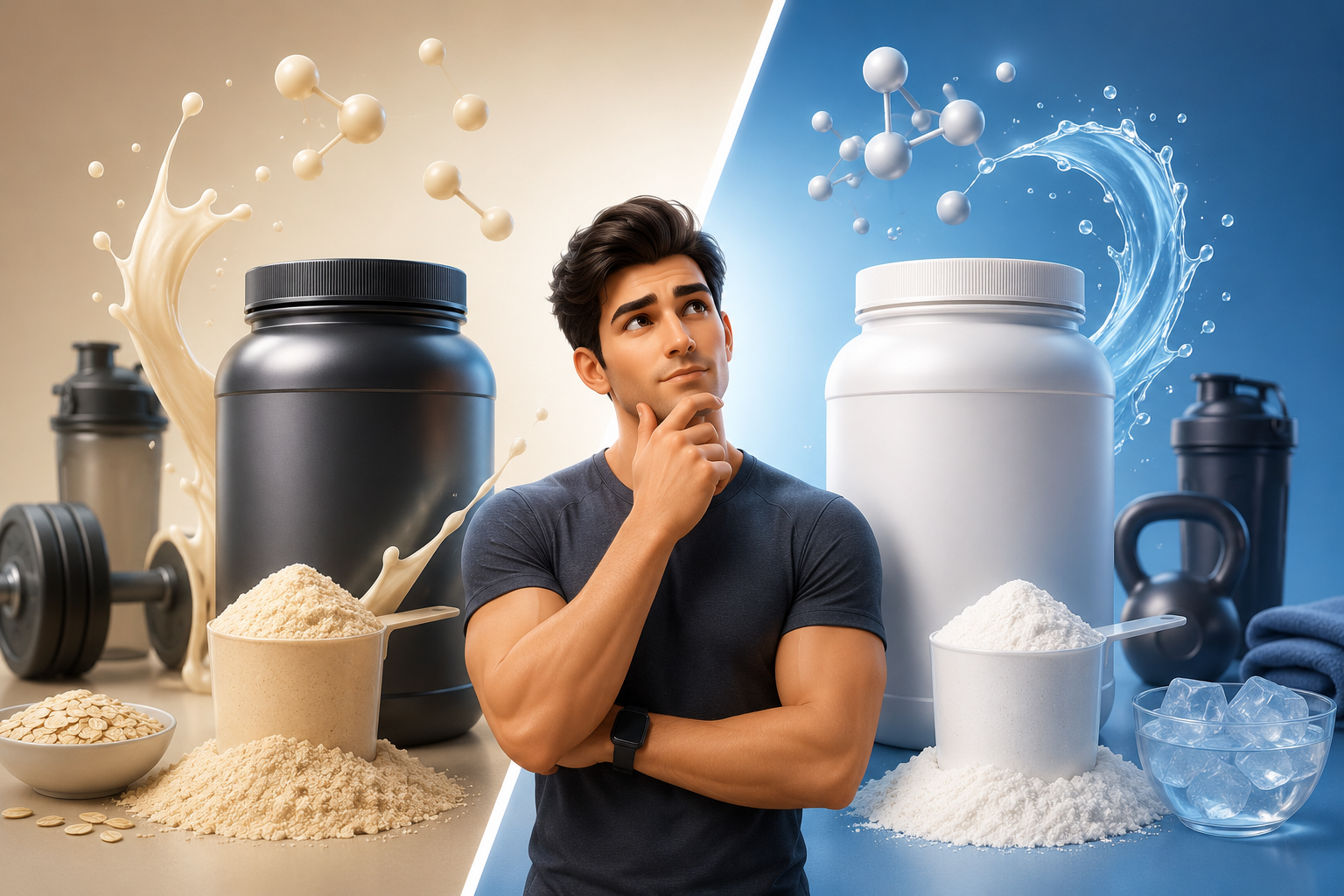
Learn the differences between whey concentrate and whey isolate to choose the right protein for your goals.
If you’ve decided to buy your first whey protein, you’ve probably come across two terms repeatedly:
- – Whey Protein Concentrate
- – Whey Protein Isolate
At first glance, they look almost identical. Both help you increase your protein intake, support muscle recovery, and fit into a healthy fitness routine. Yet one is often more expensive than the other, leading many beginners to wonder:
“Is whey isolate really worth paying extra for?”
The answer depends on your goals, budget, digestion, and overall diet.
In this guide, we’ll break down the differences in simple language so you can confidently choose the right option.
By the end of this article, you’ll know:
- – What whey concentrate is
- – What whey isolate is
- – How they are made
- – Their nutritional differences
- – Which is better for muscle gain
- – Which is better for weight loss
- – Which is easier to digest
- – Which offers better value for money
- – Our final recommendation for different types of users
Whether you’re a beginner, someone trying to lose weight, or looking to build muscle, this guide will help you make an informed decision.
Affiliate Disclosure: Some links on this page may be affiliate links. If you purchase through them, EatWorkFit may earn a small commission at no extra cost to you. Our recommendations are based on ingredient quality, brand reputation, transparency, and suitability for different fitness goals.
What Is Whey Protein?
Whey protein is a high-quality protein naturally obtained during the cheese-making process. It contains all nine essential amino acids, making it a complete protein source.
One of its biggest advantages is that it is rich in leucine, an amino acid that plays an important role in muscle protein synthesis. This is one reason whey protein is popular among people who exercise regularly.
Remember, whey protein is not a steroid or a shortcut to fitness. It is simply a convenient way to increase your daily protein intake when whole foods alone are not enough.
What Is Whey Protein Concentrate?
Whey Protein Concentrate (WPC) is the least processed form of whey protein.
During manufacturing, much of the water is removed while preserving beneficial nutrients naturally present in whey.
A typical whey concentrate contains:
- – 70–80% protein
- – Small amounts of carbohydrates
- – Small amounts of fat
- – Naturally occurring lactose
Because it undergoes less processing, concentrate often retains more of the naturally occurring compounds found in whey.
Advantages of Whey Concentrate
- – More affordable than isolate
- – Great taste and creamy texture
- – Suitable for most beginners
- – Excellent for daily protein intake
- – Good value for money
Disadvantages
- – Slightly higher lactose content
- – Contains a little more fat and carbohydrates
- – May not suit people with significant lactose intolerance
What Is Whey Protein Isolate?
Whey Protein Isolate (WPI) undergoes additional filtration to remove most of the fat, carbohydrates, and lactose.
The result is a leaner protein powder with a higher percentage of protein per serving.
A typical whey isolate contains:
- – 90% or more protein
- – Very little fat
- – Very little carbohydrate
- – Minimal lactose
Because of its lower lactose content, isolate is often chosen by people with lactose sensitivity or those following a strict calorie-controlled diet.
Advantages of Whey Isolate
- – Higher protein percentage
- – Lower lactose
- – Lower carbohydrates
- – Lower fat
- – Easily digested by many users
Disadvantages
- – More expensive
- – May not provide significant additional benefits for beginners who tolerate concentrate well
Whey Concentrate vs Whey Isolate: Quick Comparison
Feature Whey Concentrate Whey Isolate Protein Content 70–80% 90%+ Lactose Moderate Very Low Carbohydrates Higher Lower Fat Higher Lower Processing Less Processed More Processed Price Lower Higher Best For Most Beginners Lean Diets & Lactose Sensitivity
How Are They Different?
Although both products come from the same source—milk—their manufacturing process is different.
Think of it like this: Imagine squeezing fresh orange juice. The first glass contains the natural fruit pulp.
If you filter it several more times, you remove more pulp and end up with a cleaner, lighter drink. That’s similar to how whey isolate is produced. Both are nutritious, but one goes through extra filtration.
Does More Protein Mean Better Results?
This is one of the biggest misconceptions in the fitness industry.
Many people assume that because whey isolate contains slightly more protein per serving, it automatically builds more muscle.
In reality, your overall daily protein intake, training consistency, sleep, and nutrition have a much greater impact on your results than choosing concentrate over isolate.
For most healthy beginners, the difference in muscle-building outcomes between a quality whey concentrate and a quality whey isolate is likely to be small when total protein intake is matched.
EatWorkFit Tip
If you’re buying your first-ever protein powder, don’t feel pressured to buy the most expensive option.
A high-quality whey concentrate from a reputable brand is sufficient for many beginners and often offers excellent value for money.
Continue reading in Part 2, where we’ll compare muscle gain, weight loss, digestion, lactose intolerance, budget, and reveal our EatWorkFit Choice ⭐ for 2026.
About the Author