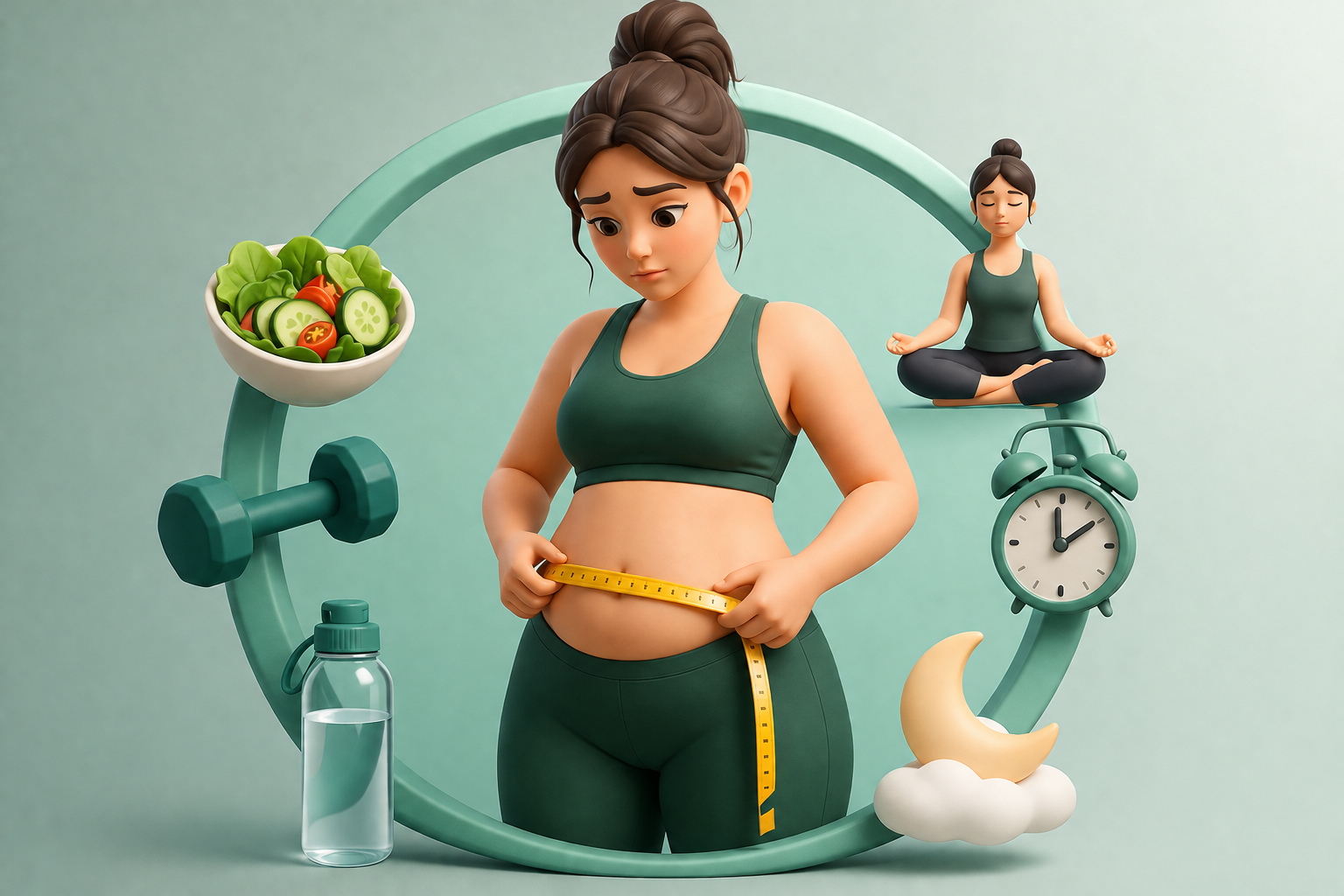
Healthy habits like balanced nutrition, exercise, quality sleep, and stress management can help reduce stubborn belly fat over time.
If there is one fitness goal that almost everyone has at some point, it is getting rid of belly fat. Whether you have just started your fitness journey or have been exercising for months, you might have wondered why fat around the stomach seems to disappear much slower than fat from other parts of the body.
I remember asking myself the same question when I began working out. No matter how many crunches I did or how much cardio I completed, the stubborn belly fat seemed to stay. Over time, I realised that there is much more to fat loss than simply exercising your abdominal muscles.
The good news is that while you cannot choose where your body loses fat first, there are healthy habits that can help reduce overall body fat, including fat around your waist.
Let us understand why belly fat is so stubborn and what you can do about it.
- Spot Reduction Is a Myth
One of the biggest misconceptions in fitness is that doing hundreds of sit-ups or crunches will burn belly fat.
Unfortunately, our body does not work that way. Exercises that target your abs help strengthen those muscles, but they do not specifically burn fat from your stomach. Fat loss happens throughout the entire body, depending on your genetics, hormones, and lifestyle.
Instead of focusing only on abdominal exercises, include a combination of strength training, cardio, and healthy eating in your routine.
- Your Diet Plays the Biggest Role
Many people spend hours at the gym but pay little attention to what they eat afterwards.
Even the best workout routine cannot make up for an unhealthy diet. Eating too many processed foods, sugary drinks, and high-calorie snacks can make it difficult to lose body fat.
Try filling your plate with:
- – Lean protein like eggs, chicken, fish, and legumes.
- – Plenty of vegetables.
- – Whole grains instead of refined carbohydrates.
- – Healthy fats from nuts, seeds, and avocado.
Small changes made consistently often produce better results than following extreme diets.
- Sleep Matters More Than You Think
Most of us focus on exercise and nutrition but forget about sleep.
Poor sleep affects hormones that control hunger and fullness. When you are sleep deprived, you may feel hungrier, crave sugary foods, and find it harder to make healthy food choices.
Aim for at least 7 to 9 hours of quality sleep every night. Your body needs this time not only for recovery but also to regulate hormones involved in weight management.
- Stress Can Slow Your Progress
Have you ever noticed that during stressful periods you tend to snack more or crave unhealthy foods?
Long-term stress increases the production of cortisol, a hormone that may contribute to fat storage around the abdominal area. While stress alone is not responsible for belly fat, managing it can certainly support your fitness goals.
Simple activities such as walking, meditation, reading, deep breathing, or spending time with loved ones can help reduce daily stress.
- Consistency Always Wins
Many people expect visible results within a few weeks and become discouraged when they do not see immediate changes.
The truth is that losing body fat takes time. Healthy weight loss usually happens gradually. Instead of looking for quick fixes, focus on building habits that you can maintain for years.
Even small improvements like choosing healthier meals, exercising regularly, drinking enough water, and getting enough sleep will eventually show results.
Healthy Habits That Can Help
Here are a few simple habits you can start today:
- – Include strength training at least three times a week.
- – Walk daily, especially after meals.
- – Eat enough protein with every meal.
- – Drink plenty of water throughout the day.
- – Reduce sugary drinks and processed snacks.
- – Stay patient and trust the process.
- – Final Thoughts
Belly fat can be one of the most challenging areas to lose, but it is certainly not impossible. Remember that there is no single exercise, special tea, or miracle diet that targets belly fat alone.
The most effective approach is to build healthy habits that improve your overall lifestyle. A balanced diet, regular exercise, proper sleep, stress management, and consistency will always produce better long-term results than temporary shortcuts.
Every healthy choice you make today brings you one step closer to your fitness goals. Stay committed, be patient with yourself, and celebrate every small achievement along the way.
To learn more about healthy eating, weight management, and practical fitness tips, keep visiting EatWorkFit and continue building habits that support a healthier and happier life.
About the Author